How Ecommerce Fulfillment Services Work When Your Brand Starts Growing

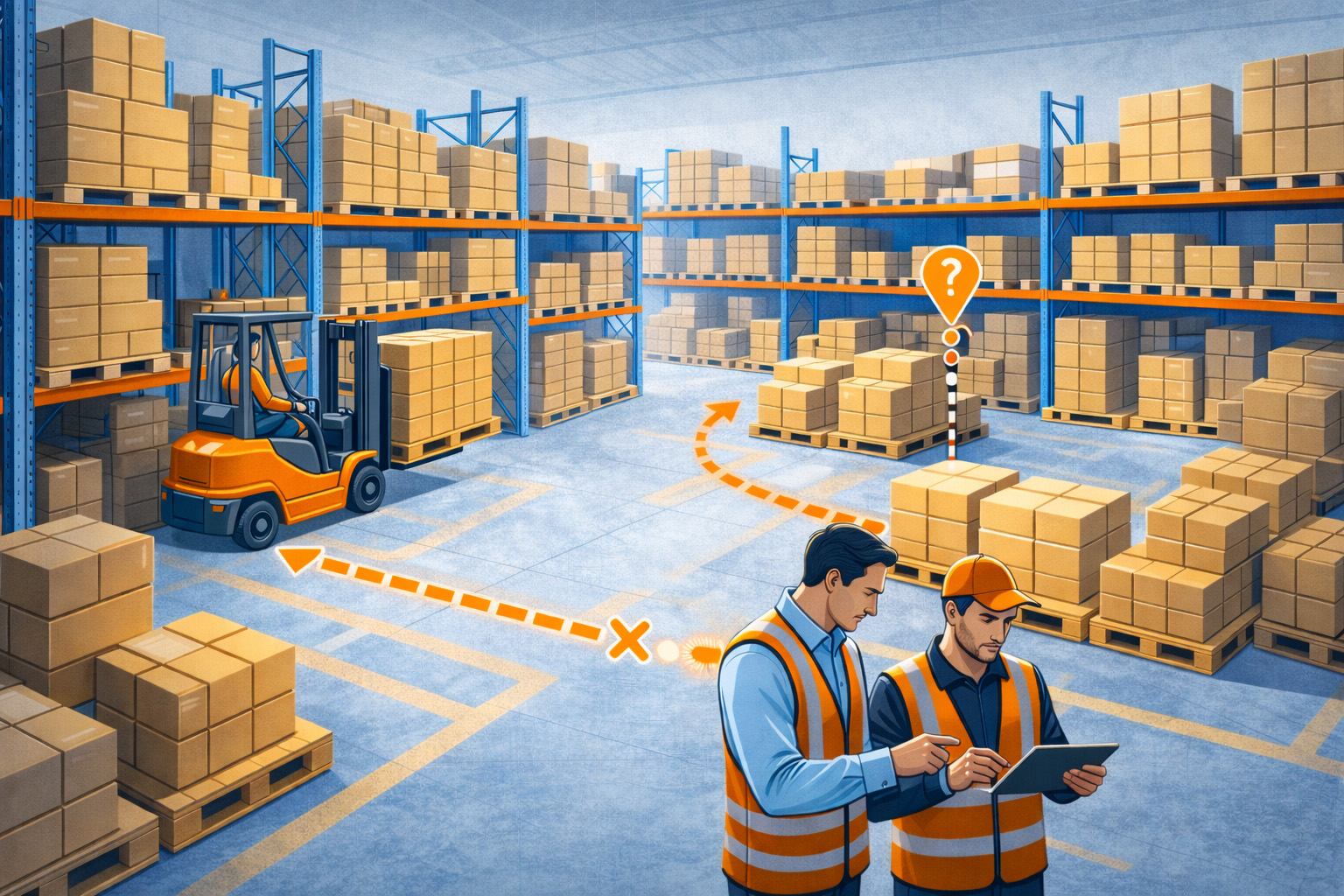
Ecommerce fulfillment services illustration showing warehouse inventory moving through picking, packing, shipping, and customer delivery.
EOS Logistics Guide Ecommerce fulfillment services become more important when a growing brand moves from simply storing inventory to fulfilling customer orders across websites, marketplaces, and retail-connected sales channels. This guide explains how fulfillment works, why it matters, and where early friction begins to appear as order volume grows.

What Are Ecommerce Fulfillment Services?

The inventory is finally in position.Products have been sourced, imported, received, counted, stored, and organized. For a growing ecommerce brand, that should feel like a major win. The product is no longer overseas, waiting at port, stuck in receiving, or sitting in an unknown status.It is in the warehouse.But in ecommerce, stored inventory is not the finish line.It is the opening whistle for the next stage of the game: turning available product into accurate, timely customer orders.Every order placed through a website, Amazon, Walmart, eBay, Wayfair, Home Depot, Lowes, or another sales channel creates a promise. The customer expects the right product, shipped on time, with tracking that works and a delivery experience that protects their trust in the brand.That is where ecommerce fulfillment services matter.Fulfillment is the operational bridge between inventory and customer experience. It connects order intake, inventory availability, picking, packing, labeling, carrier handoff, tracking updates, and exception handling into one daily execution flow.When that flow works, the brand can keep selling with confidence.When that flow starts to strain, growth begins to feel heavier.This is the next stage after warehouse storage and distribution readiness. Once inventory is organized and available, the question changes from:“Where is our product?”to:“Can we fulfill customer demand accurately, quickly, and consistently?”For ecommerce brands, that question becomes more important with every new order, every new marketplace, and every new customer promise.

Previous Article: Explore the Warehouse Storage & Distribution Services guide
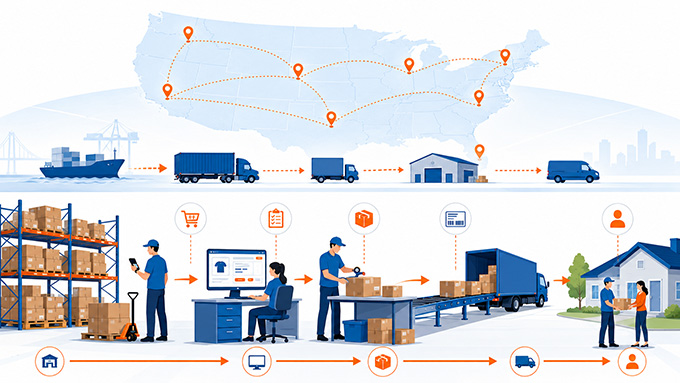
Ecommerce fulfillment services illustration showing inventory storage, order processing, picking, packing, shipping, and customer delivery.
Ecommerce fulfillment services connect warehouse inventory, order processing, pick-and-pack execution, outbound shipping, and customer delivery into one coordinated workflow.

What Happens After Ecommerce Inventory Reaches the Warehouse?

Ecommerce fulfillment begins the moment an order moves from the sales channel into the operational workflow.To the customer, the process looks simple. They choose a product, place the order, receive confirmation, wait for tracking, and expect the package to arrive as promised.Behind the scenes, every order has to move through a chain of execution.
  • • The product has to be available.
  • • The inventory record has to be accurate.
  • • The warehouse team has to find the right item.
  • • The order has to be picked, packed, labeled, staged, and handed off to the correct carrier.
  • • The tracking information has to update clearly enough for the customer to trust what is happening.
That is ecommerce fulfillment.For growing brands, fulfillment is not just “shipping.” It is the operational layer that protects the customer experience after the sale is made.This matters because ecommerce customers do not see the warehouse. They do not see the receiving process, the inventory location, the pick ticket, the packing station, or the carrier staging area.They only see the result.
  • • Was the order accurate?
  • • Did it ship on time?
  • • Did tracking update?
  • • Did the product arrive in good condition?
  • • Did the brand keep its promise?
That is why fulfillment carries so much weight for ecommerce and DTC companies. A strong product and a strong marketing campaign can create the sale, but fulfillment determines whether the customer experience holds up after checkout.This becomes even more important as a brand expands across multiple channels. A website order may have one set of customer expectations. Amazon and Walmart may create another level of marketplace pressure. Home, furniture, appliance, and larger-item channels may add more complexity because product size, packaging, handling, and delivery experience all become harder to manage.The more channels a brand serves, the more fulfillment has to become a disciplined operating system.At a basic level, ecommerce fulfillment services usually include:
  • • Receiving inventory into the warehouse
  • • Storing products in organized locations
  • • Connecting orders from ecommerce platforms and marketplaces
  • • Picking the correct items
  • • Packing orders for shipment
  • • Creating shipping labels
  • • Preparing orders for parcel, LTL, or other carrier handoff
  • • Updating tracking information
  • • Managing returns, exceptions, and customer-related fulfillment issues
When these steps work together, fulfillment becomes almost invisible to the customer.That is the goal.The customer should not have to think about the warehouse. They should only experience the confidence of ordering from a brand that delivers accurately, reliably, and consistently.

Why Multichannel Ecommerce Fulfillment Gets More Complicated

At the beginning, ecommerce growth feels like momentum.
  • • A brand launches a product.
  • • The listing starts working.
  • • Customers begin ordering.
  • • Sales expand from the company website into marketplaces.
  • • The business starts seeing proof that people want what it sells.
That is the exciting part.But each new sales channel also adds another layer of responsibility.A Shopify or website order may give the brand more control over the customer relationship. Amazon may create pressure around seller performance, shipping speed, fulfillment method, and account health. Walmart may reward faster delivery and disciplined execution. eBay, Wayfair, Home Depot, Lowes, and other channels may each bring their own rules, return standards, shipping requirements, customer communication needs, and operational details.For brands running direct-to-consumer orders through Shopify or a company website, Shopify WMS integration can become part of the fulfillment foundation. The same is true for sellers managing an Amazon fulfillment strategy , Walmart Marketplace WMS integration , or other marketplace requirements where shipping execution affects customer trust and platform performance.At first, those channels look like opportunity.Then they become the Channel Maze.Every marketplace can create a slightly different version of the same question:Can this order be fulfilled correctly, on time, and in a way that protects the brand’s standing with both the customer and the platform?That question matters because marketplace performance is not just an operations issue. Late shipments, canceled orders, out-of-stock sales, poor tracking, damaged deliveries, or preventable fulfillment errors can affect customer trust, seller reputation, account health, and future sales visibility.For the ecommerce brand, the pressure builds quietly.The team wants to work on better product photos, stronger videos, improved listings, advertising campaigns, product development, and customer retention. Those are the activities that grow the business.But fulfillment problems pull attention in the opposite direction.
  • • Instead of improving the product page, someone is checking why an order did not ship.
  • • Instead of launching a new campaign, someone is investigating inventory counts.
  • • Instead of building customer loyalty, someone is responding to a late delivery complaint.
  • • Instead of planning growth, someone is trying to understand why the warehouse, marketplace, and tracking status do not match.
That is when fulfillment starts taking up more room than it should.The brand is still growing, but the operation begins to feel heavier. More sales create more movement. More movement creates more chances for delay, error, confusion, or exception handling. More channels create more rules to follow. More customers create more service obligations to protect.This is why ecommerce fulfillment services have to scale with the business.A fulfillment process that works at low volume may not be strong enough when the brand adds new marketplaces, more SKUs, larger products, seasonal demand, or faster shipping requirements. The process has to support the business the brand is becoming, not only the business it used to be.Growth is still the goal.But as the brand expands, fulfillment has to become more organized, more visible, and more dependable — because every new channel adds opportunity, and every opportunity adds operational pressure.
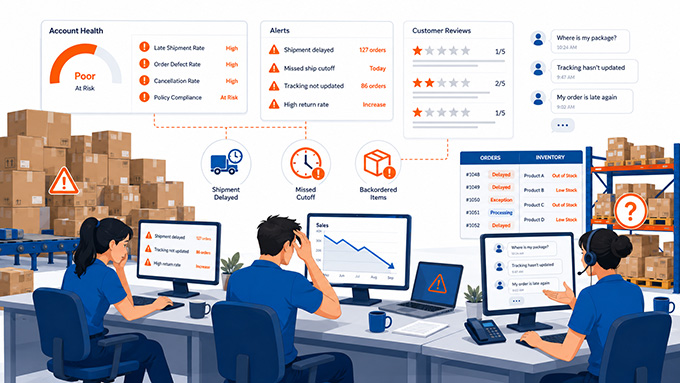
Ecommerce fulfillment problems showing declining account health, delayed shipments, inventory issues, poor reviews, and customer messages asking where is my package
Ecommerce fulfillment problems often appear as delayed shipments, inventory confusion, poor reviews, account health warnings, and customer questions about order status.

What Are the First Signs of Ecommerce Fulfillment Problems?

The fulfillment gap usually does not appear all at once.It starts with small signals.
  • • One order takes longer to ship than expected.
  • • One SKU count looks different in the system than it does on the warehouse floor.
  • • One customer asks why tracking has not updated.
  • • One marketplace order gets canceled due to a cutoff window.
  • • One return or exception takes longer to resolve than it should.
Individually, these issues may not feel like a crisis.But as order volume grows, small gaps become patterns.The brand may start noticing that fulfillment takes more internal attention than before. Inventory questions become more frequent. Shipping status checks become more urgent. Customer service tickets become harder to answer quickly. Marketplace rules feel less forgiving. The warehouse team may still be working hard, but the business has less confidence in what is happening at each step.That is where the fulfillment gap begins.The gap is the space between what the brand promises customers and what the fulfillment operation can consistently execute.For ecommerce brands, this gap can show up in several ways:
  • • Inventory appears available, but orders cannot move quickly
  • • Pick and pack workflows depend too heavily on manual checking
  • • Tracking updates lag behind customer expectations
  • • Product size or packaging creates handling challenges
  • • Returns and exceptions pull the team into cleanup mode
  • • Marketplace orders create pressure around shipping deadlines
  • • Customer service spends too much time investigating order status
  • • Leadership cannot clearly see where fulfillment is slowing down
The danger is not only that orders ship late.The bigger issue is that fulfillment pressure begins stealing focus from the work that should be growing the brand.A company may need new product photography, better videos, stronger marketplace listings, updated ad campaigns, expanded product lines, and improved customer retention. But when fulfillment becomes reactive, the team’s attention shifts toward tracking problems, warehouse questions, customer complaints, and exception handling.That is the wrong-work trap.The business is still moving, but too much energy is being spent defending the operation instead of building the future.For ecommerce brands, this is the point where fulfillment becomes more than a back-office process. It becomes a growth constraint.The brand may still have demand. The product may still be strong. The customer base may still be expanding. But if fulfillment cannot keep up with that momentum, every new order adds pressure instead of confidence.Recognizing these early signs matters.Because the sooner a brand understands where the fulfillment gap is forming, the easier it is to protect customer experience, marketplace account health, and long-term growth before small issues become larger operational setbacks.

Why Do Ecommerce Fulfillment Problems Grow Across Sales Channels?

Understanding ecommerce fulfillment services is the first step.The next step is understanding why those same workflows become harder to control as the brand grows.At low volume, the team may be able to manage fulfillment pressure with extra effort. A few manual checks, a few status updates, a few rushed shipments, and a few customer service responses may keep the operation moving.But growth changes the game.
  • • More orders create more movement.
  • • More channels create more rules.
  • • More customers create more service obligations.
  • • More SKUs create more inventory pressure.
  • • More returns and exceptions create more cleanup work.
What once felt manageable can become harder to control across Amazon, Walmart, a company website, eBay, Wayfair, Home Depot, Lowes, and other sales channels. Each channel may have its own policies, shipping standards, customer communication requirements, return expectations, and account health risks.That is where the story continues.In the next guide, we will look at why ecommerce fulfillment problems often get worse across multiple sales channels — and why late shipments, inventory confusion, missed cutoffs, canceled orders, and customer complaints can start affecting more than warehouse performance.They can affect reputation, marketplace standing, customer trust, and the company’s ability to keep growing.The brand is not failing.The demand is still there.The customers are still buying.But the fulfillment model may be entering a stage where effort alone is no longer enough to protect what the brand has built.

Next guide: Why Ecommerce Fulfillment Problems Get Worse Across Multiple Sales Channels

Frequently Asked Questions About Ecommerce Fulfillment Services

What are ecommerce fulfillment services?
Ecommerce fulfillment services help online brands move products from warehouse inventory to customer orders. This usually includes receiving inventory, storing products, connecting orders from ecommerce platforms or marketplaces, picking items, packing orders, creating shipping labels, handing shipments to carriers, updating tracking, and helping manage returns or exceptions. For growing brands, fulfillment is not just shipping. It is the process that turns customer demand into accurate, timely order execution.
How is ecommerce fulfillment different from regular warehousing?
Warehousing focuses on storing inventory. Ecommerce fulfillment focuses on moving that inventory into customer orders. A warehouse may receive, count, organize, and store product. Ecommerce fulfillment adds the execution layer: connecting orders from sales channels, picking the correct items, packing them properly, creating shipping labels, handing shipments to carriers, updating tracking, and managing issues that happen after the order is placed. For growing ecommerce brands, the difference matters because stored inventory does not create customer satisfaction by itself. The inventory has to move accurately, visibly, and on time.
When should an ecommerce brand use a fulfillment partner?
An ecommerce brand may need a fulfillment partner when order volume, SKU count, sales channels, or shipping expectations become too difficult to manage internally. Early-stage fulfillment may work with a small team, but growth often creates more pressure around inventory accuracy, shipping deadlines, returns, marketplace requirements, and customer communication. A fulfillment partner can help when the brand needs more structure, better visibility, and a more scalable way to move orders.
How does ecommerce fulfillment affect customer experience?
Ecommerce fulfillment directly affects customer experience because the customer only sees the result of the operation. They expect the correct product, accurate tracking, timely shipping, and delivery in good condition. A strong product and marketing campaign may create the sale, but fulfillment helps determine whether the customer trusts the brand enough to buy again.
Why does ecommerce fulfillment become harder across multiple sales channels?
Ecommerce fulfillment becomes harder across multiple sales channels because each platform can create different order flows, shipping expectations, return rules, customer communication needs, and account health requirements. A brand selling through its website, Amazon, Walmart, eBay, Wayfair, Home Depot, Lowes, or other channels has to keep inventory and fulfillment execution aligned across all of them. That is why multichannel fulfillment often requires stronger systems, clearer processes, and better warehouse coordination.
What are the early signs of ecommerce fulfillment problems?
Early signs of ecommerce fulfillment problems may include delayed shipments, inventory mismatches, tracking delays, increased customer service tickets, missed carrier cutoffs, canceled orders, return backlogs, or more time spent checking order status. These problems may begin as small issues, but as order volume grows, they can affect customer trust, marketplace standing, and the brand’s ability to keep scaling.
Continue the Ecommerce Fulfillment Series

Why Ecommerce Fulfillment Problems Get Worse Across Multiple Sales Channels

Article 2 continues the story by showing how fulfillment pressure grows when marketplace rules, customer expectations, inventory visibility, and shipping deadlines start pulling the operation in different directions. Read the Next Guide
LinkedIn
Facebook
X
Email
Print

Leave a Reply

Picture of Wayne Watson

Wayne Watson

Wayne Watson is a Marketing Specialist at Enterprise Order Solutions (EOS), where he works to bridge the gap between fast-growing e-commerce brands and the fulfillment systems that support them. Drawing from a background in technology, marketing, and design, Wayne focuses on helping brands navigate complexity with clarity—so they can spend less time managing logistics and more time building their business.

Read More Articles

Discover more from Enterprise Order Solutions

Subscribe now to keep reading and get access to the full archive.

Continue reading