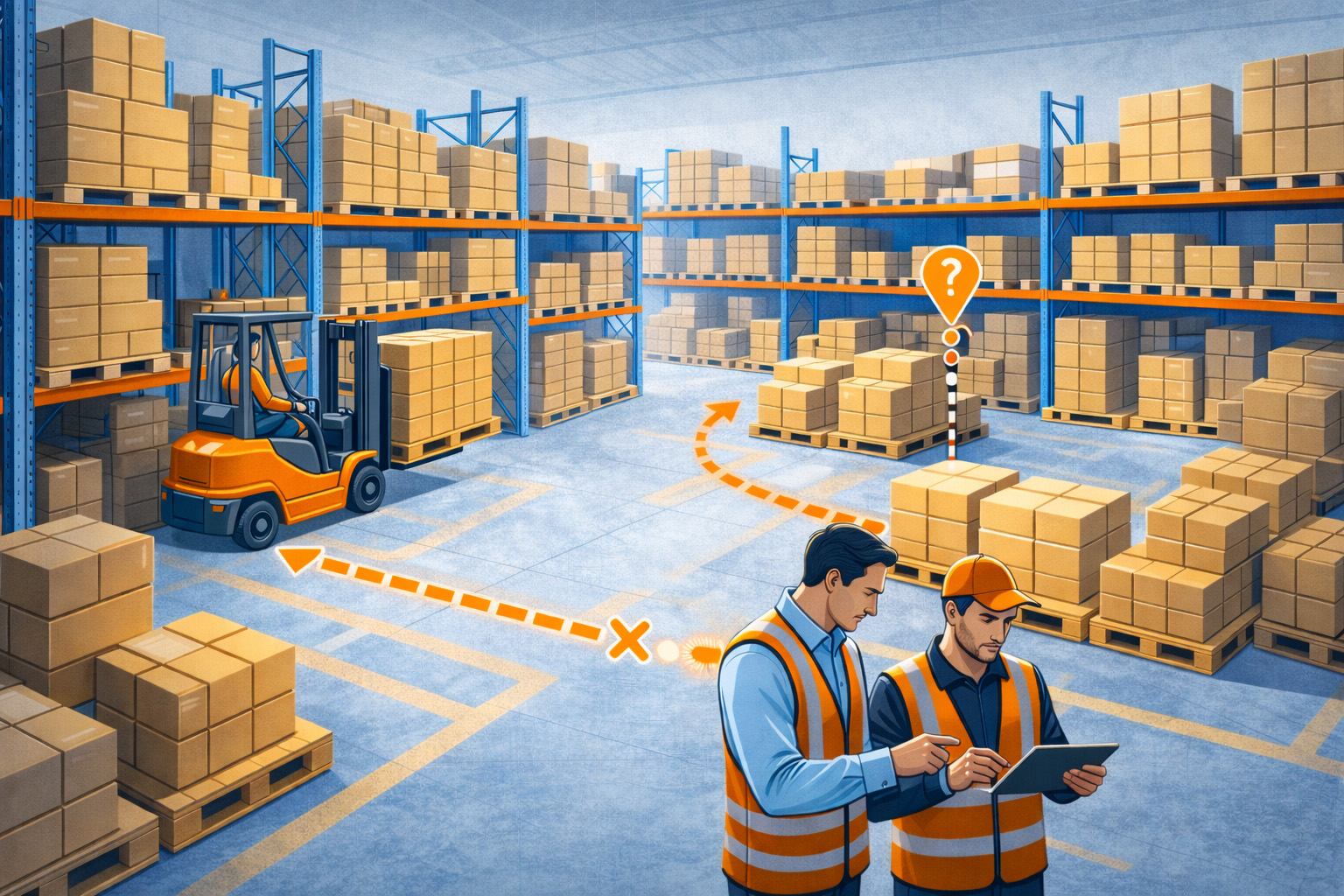
How Warehouse Storage and Distribution Services Actually Work
Warehouse storage and distribution services are often viewed as simple space and handling support. In reality, they play a much larger role in whether inventory is organized, accessible, staged correctly, and ready to move when your business needs it.
In this first article of the series, we introduce the hidden friction that can develop when product is stored but not fully ready for downstream distribution. In the next article, we will go deeper into why those breakdowns begin and how the pressure grows over time.
Why Stored Inventory Is Not Always Ready for Distribution
Your warehouse storage can face multiple invisible challenges. Pallets may be in place, but inventory is not fully verified. Numbers feel uncertain. Cycle counts take too much time. The system that once felt manageable can start creating doubt, delay, and extra strain just when your business needs more confidence.
You may have outgrown a setup that seemed good enough just a year ago.
That is often how warehouse friction begins. Product is physically present, but your operation no longer feels as organized, dependable, or ready as it should. What looks stable on the surface can quietly slow the business underneath, especially when demand changes, distribution needs increase, or your company starts moving faster than the warehouse can comfortably support.
A distributor may have product in the building and still struggle to move it when a customer order needs to go out. A manufacturer may have inventory on hand, but not staged in a way that supports timely distribution. A growing brand may feel relieved once product is finally in the warehouse, only to discover that storage alone does not make it easy to access, organize, or release when demand changes.
Operations managers are often very familiar with these kinds of warehouse problems.
Stored inventory and distribution-ready inventory are not always the same thing.
Product can be on-site and still create friction beneath the surface. It may be difficult to reach quickly, unclear in quantity, staged inconsistently, or simply not aligned with what your business needs next. When that happens, the warehouse stops feeling like support and starts feeling like a source of drag.
For readers continuing from our Transload & Crossdock Warehouse Services series, this is the next part of the story. Once freight has been unloaded, converted, or moved through a crossdock environment, the next question becomes whether that inventory is stored in a way that supports downstream distribution.
If you are catching up, our article The Hidden Cost Behind Transload and Crossdock Warehouse Operations helps explain how freight can arrive successfully and still create friction before the next stage begins.
We understand how easily that gap can develop. You may do the right thing by securing warehouse storage, then discover that storage alone does not solve the real operational challenge. What matters is whether inventory is organized, accessible, and ready to move when your business needs it.
That is where warehouse storage and distribution services begin to matter more than you may expect.
What Warehouse Storage and Distribution Services Include
Warehouse storage and distribution services are often misunderstood as simple space and handling support. In reality, they play a much larger role in how product moves through your operation and how prepared your business is for what comes next.
At a basic level, storage sounds simple. Product arrives, it is placed into a warehouse location, and it stays there until needed. In practice, effective warehouse storage involves much more than finding room for pallets or cartons. Inventory has to be placed in a way that supports accessibility, organization, count accuracy, staging, and outbound flow.
That is where distribution starts to matter.
Distribution does not begin when a truck is loaded. It begins earlier, with how product is received, stored, positioned, and prepared inside the warehouse. If storage is disorganized, difficult to access, or disconnected from what your business needs next, downstream distribution becomes harder than it should be.
Operations managers understand this quickly. The real value of warehouse storage is not where inventory sits. It is how ready that inventory is to move. Effective warehouse storage and distribution services create a controlled environment where products can be stored with purpose, located when needed, staged efficiently, and released with less friction when orders, replenishment requests, or outbound distribution needs change.
For readers continuing from our importer and container receiving content, this is another important transition point in the supply chain story. Freight may arrive successfully, and inventory may even be unloaded and registered, but the next challenge is whether that inventory is stored in a way that supports accessibility and dependable movement later.
Our article How Cross-Border Logistics Really Works offers a broader view of how inbound freight turns into warehouse execution across the U.S. supply chain.
What seems manageable during slower periods can become much harder to control once your business needs faster, cleaner, and more dependable movement.
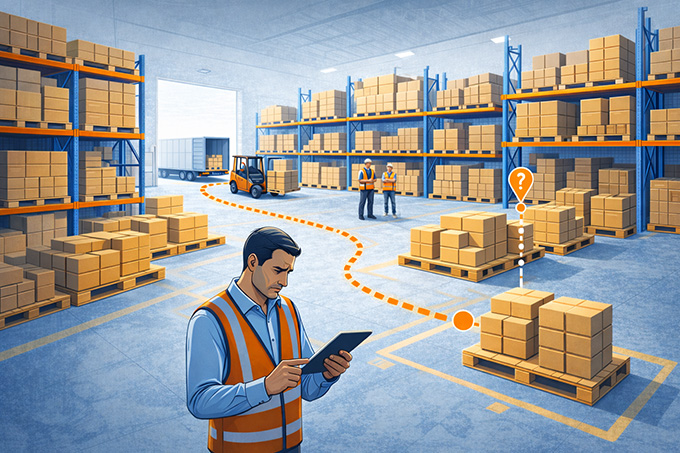
Common Warehouse Storage Problems That Slow Distribution
The hidden friction usually starts when inventory is technically in storage, but not truly ready to support the next move.
This is where warehouse problems become harder to spot from the outside. Product may be in the building. Quantities may appear available. Space may look organized enough at a glance. But when your business needs inventory to move, the gaps begin to slow decisions, weaken confidence, and disrupt flow.
A pallet may be stored in a way that is difficult to access quickly. Inventory may be spread across locations without clear staging logic. Product counts may be close, but not dependable enough to support confident outbound planning. In other cases, the warehouse may simply not be organized around what needs to happen next, so distribution requests create more disruption than expected.
Operations managers and supply chain teams often feel this friction before anyone else does. They are the ones fielding questions about whether product is ready, whether counts are reliable, or why a simple outbound request is suddenly taking more time than it should. On paper, the inventory is there. In practice, it may still not be positioned for smooth movement.
We understand how frustrating that can be. Many warehouse problems do not begin as major failures. They begin as small gaps in organization, accessibility, staging, and readiness. Over time, those small gaps create hesitation inside the operation. Teams begin working around the warehouse instead of trusting it to support the next move with confidence.
That is the difference between stored inventory and usable inventory.
When inventory is stored without enough structure behind it, the warehouse may still appear full, but it becomes harder to support dependable outbound flow.
Our article Inventory Control Isn’t Just a Metric, It’s the Heartbeat of 3PL Success explores this more directly by showing why inventory accuracy and organization matter long before the next order or shipment is released.
This is often where the real pressure starts to build. The warehouse is no longer just holding product. It is either helping the business move forward, or quietly making that harder.
Why Warehouse Storage Problems Affect Business Growth
When warehouse storage and distribution are not aligned, the consequences do not stay inside the warehouse for long.
What begins as a storage issue can quickly turn into slower outbound movement, delayed replenishment, avoidable order disruption, and more pressure on the people trying to keep the business moving. Product may be physically present, but if it is not organized, accessible, and ready to support distribution, your business feels that friction in very real ways.
This pressure often becomes more visible when the business starts changing. Seasonal surges, natural business expansion, new customer demand, growing SKU counts, broader distribution needs, or changing order patterns can all expose the difference between stored inventory and inventory that is truly ready to move. What once felt manageable inside the warehouse can start creating more friction as volume, timing, and expectations increase.
Operations managers often see this first in the form of hesitation. Simple requests take longer than expected. Outbound planning becomes less confident. Teams spend more time checking, confirming, locating, and adjusting than they should. Instead of supporting growth, the warehouse starts absorbing time and attention that should be spent elsewhere.
That pressure reaches beyond internal operations.
Customer service teams may feel it when shipments are delayed or expectations become harder to manage. Sales teams may feel it when inventory looks available, but the operation is not fully prepared to move on it. Leadership feels it when the business appears stable on paper, yet day-to-day execution still feels harder than it should.
We understand how quickly that kind of friction can affect confidence across the business. Warehouse strain rarely stays contained. It spreads into planning, service, responsiveness, and your company’s ability to grow with confidence.
That is why warehouse storage and distribution services matter more than you may expect. The real value is not just where inventory sits. The real value is whether the warehouse helps your business stay ready, responsive, and dependable as demand changes.
For readers thinking further downstream, this connects closely to what happens when fulfillment depends on cleaner inventory movement and stronger execution inside the warehouse.
Our article When U.S. Fulfillment Finally Works for Importers shows how better inventory readiness supports more predictable outbound operations and smoother follow-through.
When storage stops supporting responsiveness, even ordinary distribution needs can start creating unnecessary strain and pull attention away from growth.

When Warehouse Storage Stops Supporting Distribution Readiness
At this point, the issue is no longer whether inventory is in the building. The real issue is whether it is ready to move when your business needs it.
That is where many operations start to feel the strain more clearly. A system that looked stable during slower periods can begin to show weaknesses once demand increases, order patterns shift, or distribution needs become more urgent. Product may still be stored, but your warehouse no longer feels as responsive as it should.
For operations managers, that creates a difficult tension. The product is there, yet simple outbound requests take longer. Counts need another check. Staging is not as clean as expected. What should feel routine starts feeling harder to trust.
If the product is there, but your team still hesitates before the next move, what is really breaking down inside the warehouse?
That is the deeper problem hiding inside warehouse storage.
When storage stops supporting readiness, the operation starts losing time in places that are harder to see at first, but more costly over time.
That is exactly where the next part of the story begins.
In Why Inventory Storage Breaks Down Before Distribution Begins, we take a closer look at what causes that breakdown and why small gaps in organization, accessibility, and execution can quietly create bigger problems across the operation.
Frequently Asked Questions About Warehouse Storage and Distribution
What are warehouse storage and distribution services?
Warehouse storage and distribution services help businesses store inventory in a way that supports organization, accessibility, staging, and outbound movement. The goal is not just to hold product, but to keep it ready for distribution when business demand changes.Why is stored inventory not always ready for distribution?
Stored inventory is not always distribution-ready because product can still face issues with verification, accessibility, count accuracy, staging, or placement inside the warehouse. Inventory may be physically present, but that does not always mean it can move quickly and confidently when needed.What warehouse storage problems can slow distribution?
Common warehouse storage problems include uncertain inventory counts, hard-to-access pallets, weak staging logic, inconsistent organization, and delays in verifying product readiness. These problems can slow decisions, disrupt outbound flow, and create more pressure on warehouse teams.How do warehouse storage problems affect business growth?
Warehouse storage problems can affect business growth by slowing outbound movement, delaying replenishment, increasing extra labor, and making customer response harder to manage. As demand grows, weak storage discipline can create more friction across operations, customer service, and planning.What is the difference between stored inventory and usable inventory?
Stored inventory refers to product that is physically inside the warehouse. Usable inventory means that product is organized, verified, accessible, and ready to support the next operational move. In many warehouse environments, those two are not always the same.Why Inventory Storage Breaks Down Before Distribution Begins
Article 2 expands the focus introduced here and shows how small warehouse gaps can grow into larger problems across distribution, planning, and business performance.
Discover more from Enterprise Order Solutions
Subscribe to get the latest posts sent to your email.