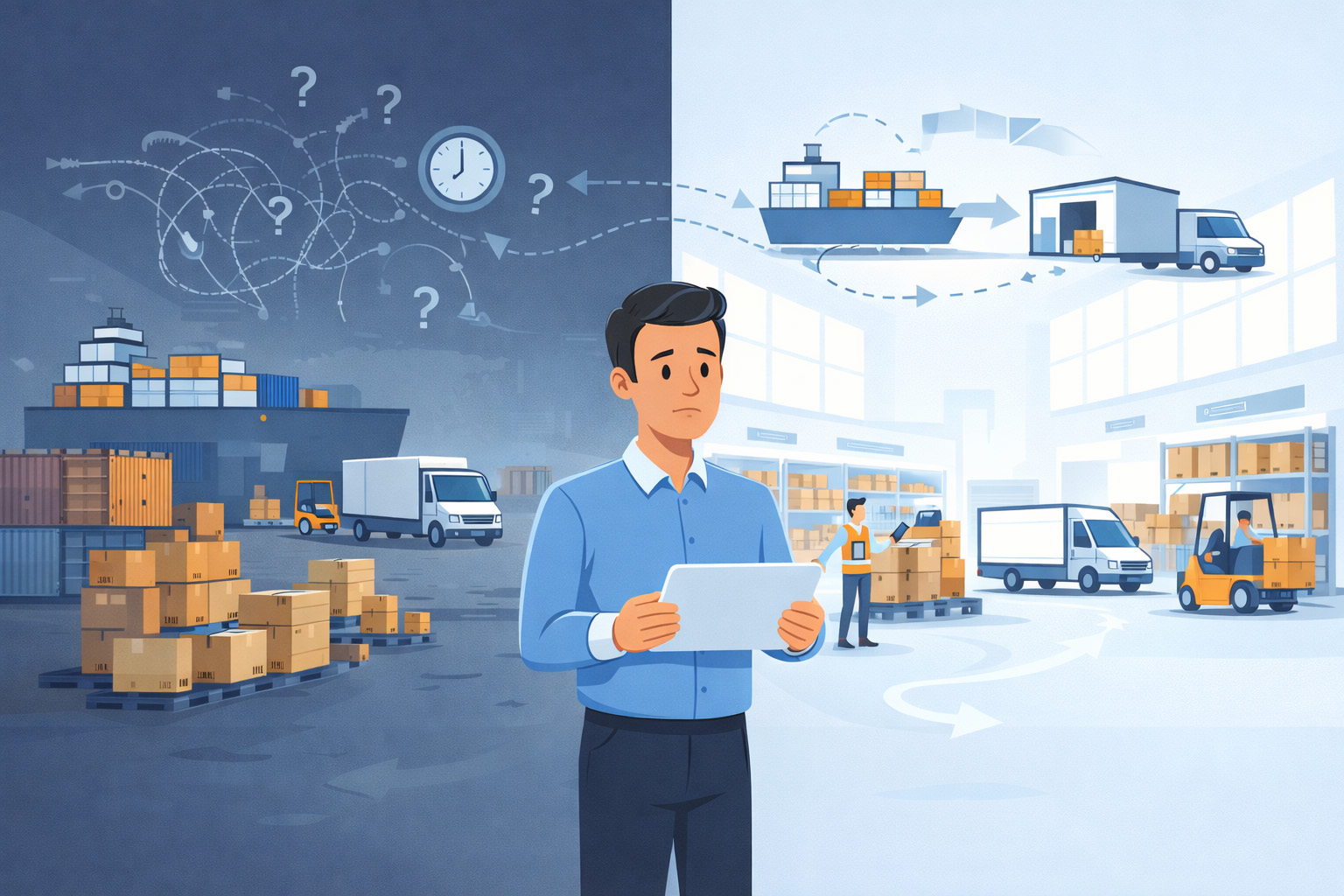
Most import problems do not happen on the ocean. They happen after the container lands. The freight arrives on time, and then inventory sits. Receiving is backed up. Orders cannot release. Customers start asking questions. Fees quietly pile up. Nothing looks obviously broken. But everything feels slower and more expensive than it should. If you are importing into the U.S., this is usually where growth turns into friction. And it almost always traces back to one place: your downstream execution.
Why Scaling Imports Breaks Down at the Warehouse Level
This is the point we see repeatedly with growing importers.
The first few shipments feel manageable. Manual processes hold together. Spreadsheets work. The team hustles and makes it happen.
But as volume increases, those same processes begin to strain.
Receiving slows because dock time is not structured. Inventory accuracy slips because scanning is not disciplined. Systems do not talk cleanly to each other, so orders release late or require manual checks. Returns pile up without a clear path back into inventory.
Small delays compound into larger ones, and teams spend more time fixing yesterday’s issues than preparing for tomorrow’s demand.
At that stage, the challenge is not space or labor. It is coordination.
The warehouse, systems, inventory control, and order fulfillment are not operating as one system. Without that alignment, every shipment feels heavier than it should, costs quietly increase, and growth becomes stressful instead of predictable.
Warehousing is not just about storage. It is more about operational discipline.
What Efficient U.S. Distribution and Fulfillment Should Look Like
When the U.S. side of the supply chain is aligned, nothing feels dramatic.
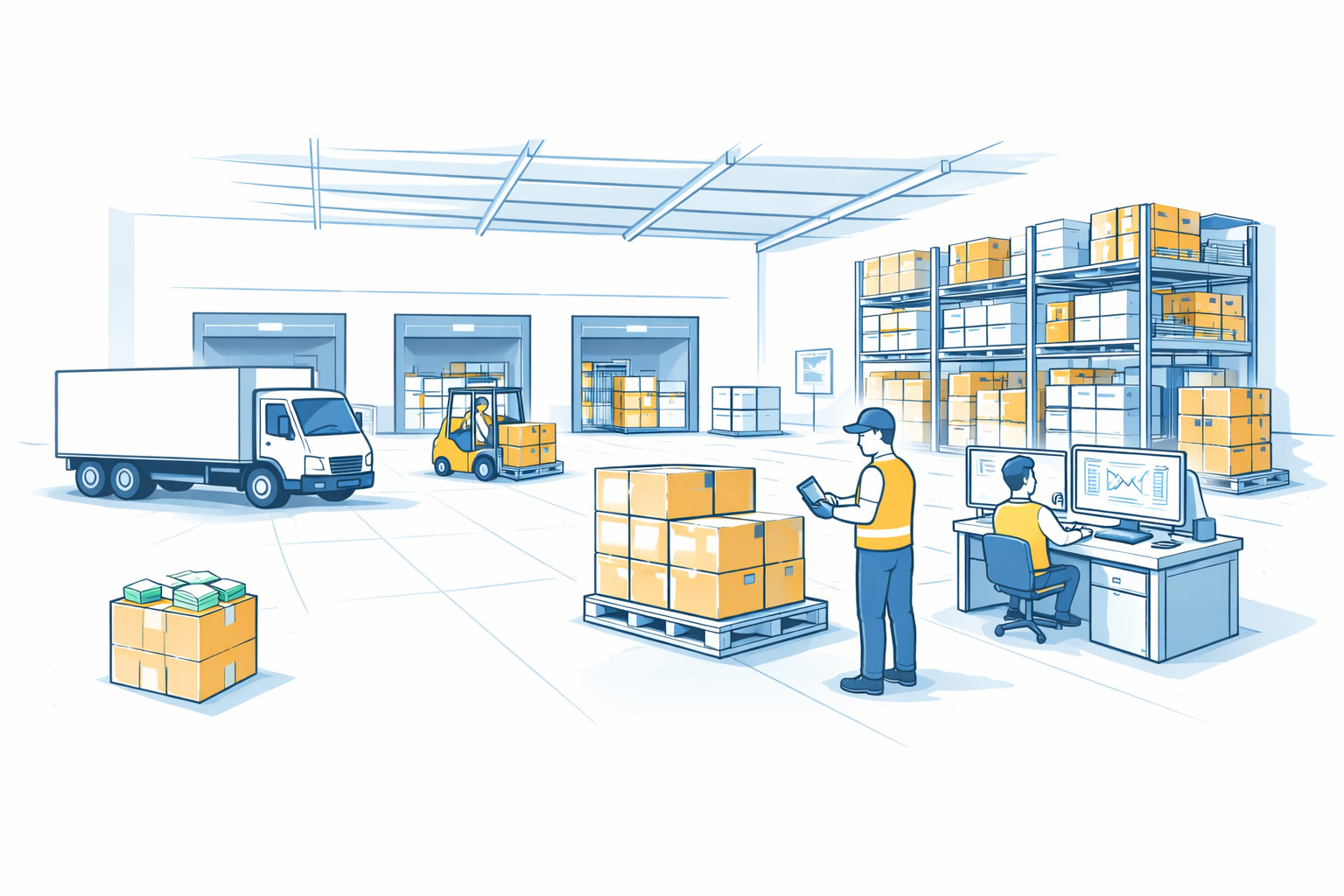
Containers arrive and unload immediately. Inventory is scanned and becomes visible within hours. Systems update automatically. Orders release the same day. Returns process cleanly. Customers receive their packages when promised.
No heroics. No fire drills. Just flow.
Good operations are quiet. Quiet is profitable.
Pre-Shipment Checklist for Importers Shipping to the U.S.
Before your next container leaves China, confirm:
- Dock time is scheduled
- Receiving capacity is ready
- Inventory will be live within 24 to 48 hours
- Systems integrate with your ERP and marketplaces
- Orders can ship immediately
- Returns have a defined process
If any answer is unclear, delays are likely.
A little planning upstream prevents most downstream problems. That is exactly why cross-border logistics execution has to stay connected to warehouse readiness on the U.S. side.
How Enterprise Order Solutions Supports U.S. Fulfillment for Global Brands
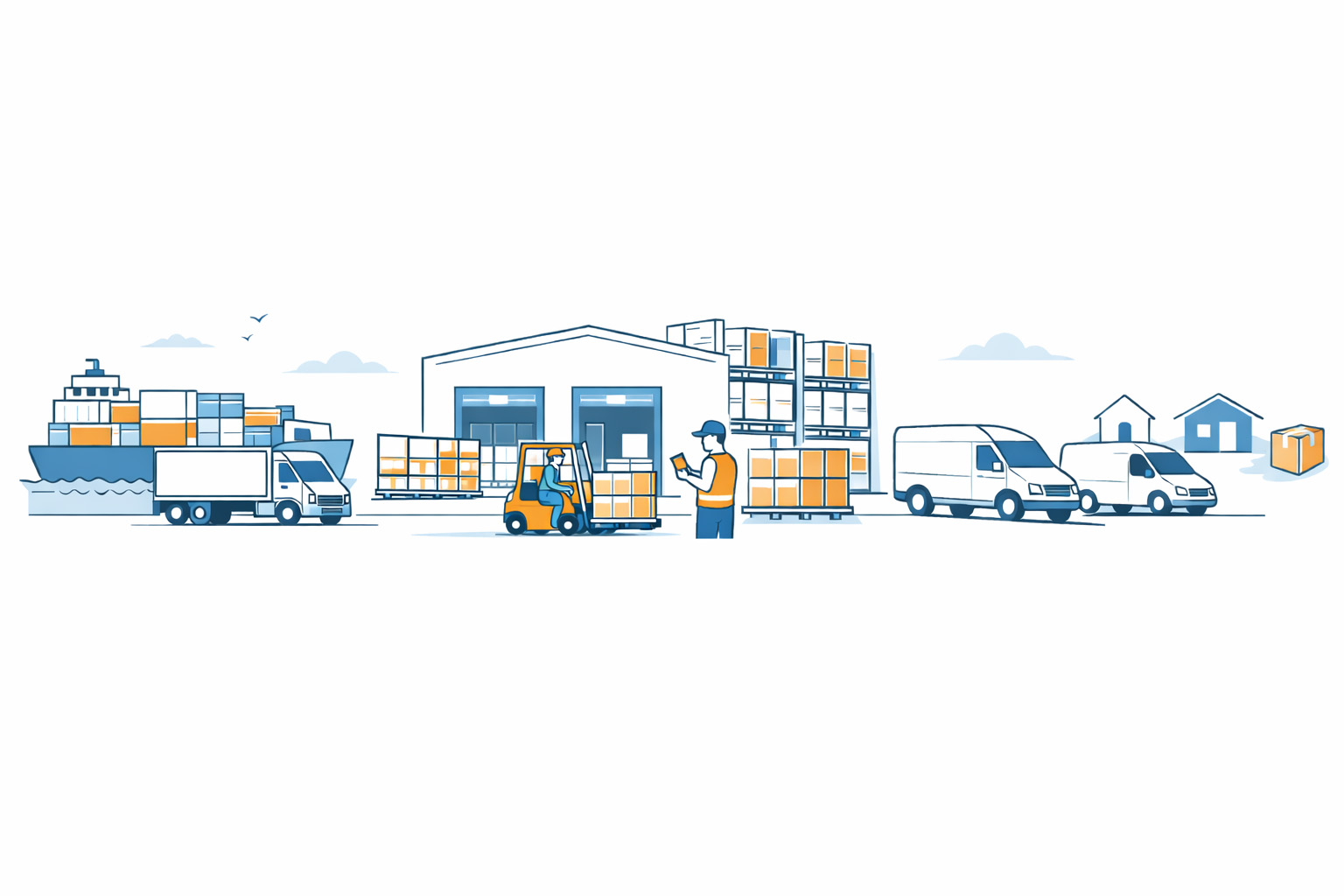
At Enterprise Order Solutions, we view fulfillment as the execution layer that connects global supply chains to the U.S. market.
Whether inventory originates in Shenzhen, Chicago, or anywhere in between, the expectation is the same once it arrives: receive it quickly, account for it accurately, and ship it reliably.
Our focus is straightforward: disciplined receiving, clean system integration, accurate inventory control, and dependable order fulfillment across multiple U.S. locations. A flexible WMS and ten years of operational experience support that goal: making the downstream side of the supply chain predictable.
When execution is predictable, growth feels manageable.
And logistics fades into the background, where it belongs.
In the next article, When Importing Gets Harder Than It Should Be, we look at what happens after imported freight arrives but inventory still is not ready to sell, ship, or support customer demand.
Frequently Asked Questions
Why do import operations often break down after the container arrives?
Import operations often break down after the container arrives because receiving, inventory control, systems, returns, and order release are not aligned. The freight may arrive on time, but downstream execution slows, creating delays, added costs, and operational friction.What is the main reason scaling imports becomes harder at the warehouse level?
The main reason scaling imports becomes harder is coordination. Manual processes, spreadsheets, inconsistent scanning, and disconnected systems may work at low volume, but they begin to fail as shipment volume increases.What hidden costs come from poor fulfillment execution?
Hidden fulfillment costs can include missed receiving windows, demurrage and detention, extra drayage moves, relabeling or compliance fixes, inventory discrepancies, and expedited shipping used to maintain service levels.Why are execution costs harder to see than freight costs?
Freight costs are usually visible in the original quote, while execution costs appear later through delays, corrections, fees, and service recovery. That makes them harder to spot even though they can impact margin quickly.What should efficient U.S. distribution and fulfillment look like?
Efficient U.S. distribution and fulfillment should feel stable and predictable. Containers should unload quickly, inventory should become visible within hours, systems should update automatically, orders should release the same day, and returns should process cleanly.What should importers confirm before shipping a container to the U.S.?
Importers should confirm that dock time is scheduled, receiving capacity is ready, inventory will be visible within 24 to 48 hours, systems integrate with their ERP and marketplaces, orders can ship immediately, and returns have a defined process.How does EOS support U.S. fulfillment for global brands?
EOS supports U.S. fulfillment for global brands through disciplined receiving, clean system integration, accurate inventory control, and dependable order fulfillment across multiple U.S. locations, helping make downstream execution more predictable.Continue the Importer Logistics Guide
Continue to the next importer article, or return to the full importer logistics hub to explore the complete pillar guide.
Discover more from Enterprise Order Solutions
Subscribe to get the latest posts sent to your email.