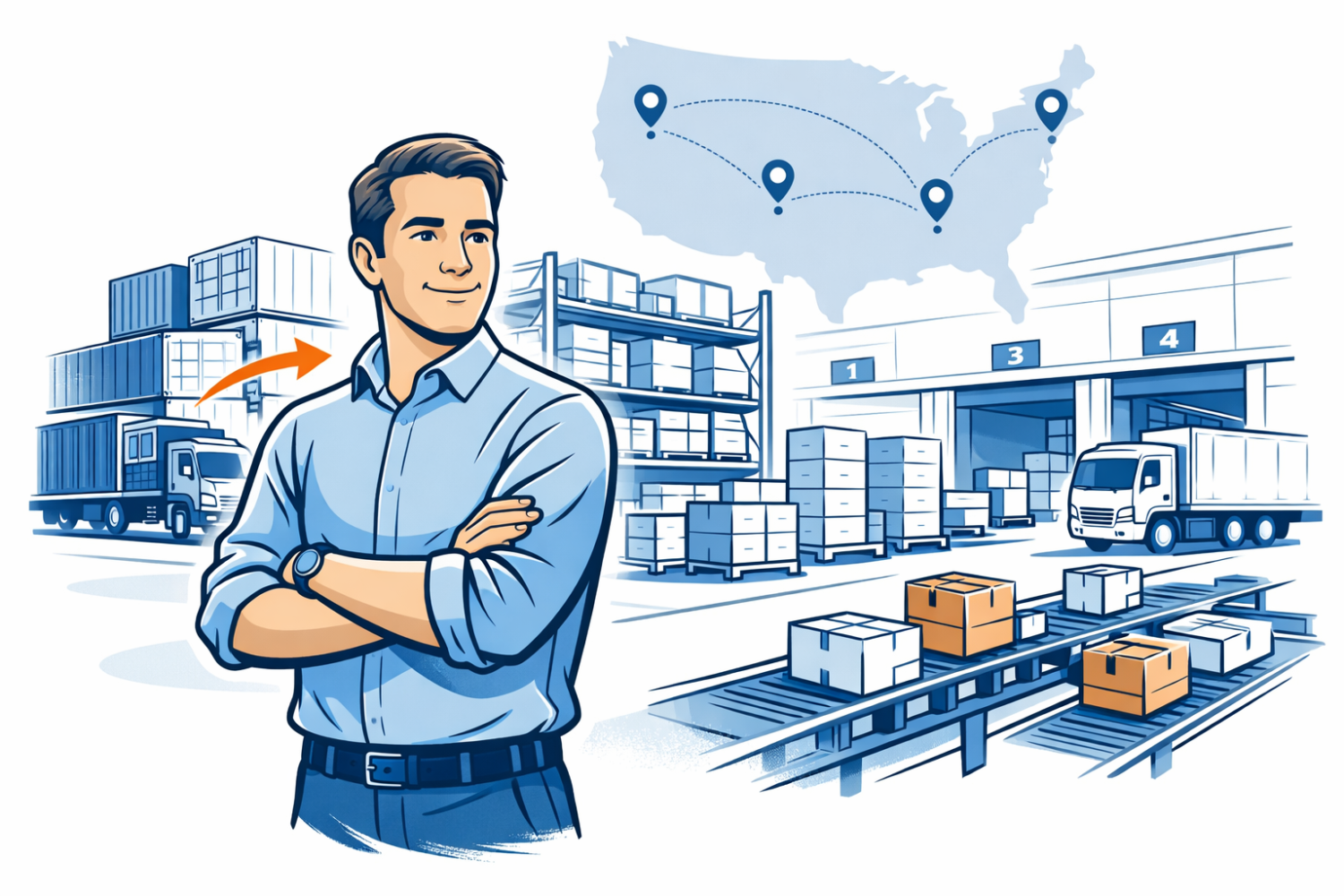
When Managing Fulfillment Stops Working at Scale
By this point, most importers into the U.S. market have already answered an important question.
They know their operation is not broken. They know demand is real. They know orders are shipping.
What they are questioning now is something deeper: Is our U.S. fulfillment execution still designed for the business we are running today, or are we relying on manual effort to bridge the gap?
In the earlier articles, we explored where execution strain begins once goods land stateside, from how cross-border logistics flows into U.S. fulfillment to why fulfillment issues for importers are easy to miss.
This article focuses on the next step: what predictable U.S. fulfillment actually looks like at scale, and why the right 3PL changes everything.
Why Predictable Fulfillment Matters for U.S. Importers
Importers do not struggle because they lack options. They struggle because fulfillment outcomes become less predictable as volume, channels, and customer expectations grow within the U.S. market.
Predictable fulfillment for U.S. importers means:
- Inbound shipments are received on schedule after arrival
- Inventory becomes visible quickly and accurately in U.S. systems
- Orders release without manual intervention
- Exceptions are rare, documented, and resolved without escalation
When these conditions exist, fulfillment fades into the background. When they do not, execution demands constant attention.
The difference is not effort. It is design.
Why Good Enough Fulfillment Fails as Import Volume Grows
Many importers enter the U.S. market on systems that were never designed to absorb sustained complexity.
They rely on:
- Manual checks
- Institutional knowledge
- People stepping in to solve problems before customers notice
That approach can work early.
But as import volume grows and distribution scales across the U.S., it introduces hidden risk:
- Delays compound instead of resolving
- Inventory confidence erodes
- Costs rise without clear attribution
- Leadership stays closer to daily execution than planned
At that point, switching fulfillment partners is not about dissatisfaction. It is about alignment.
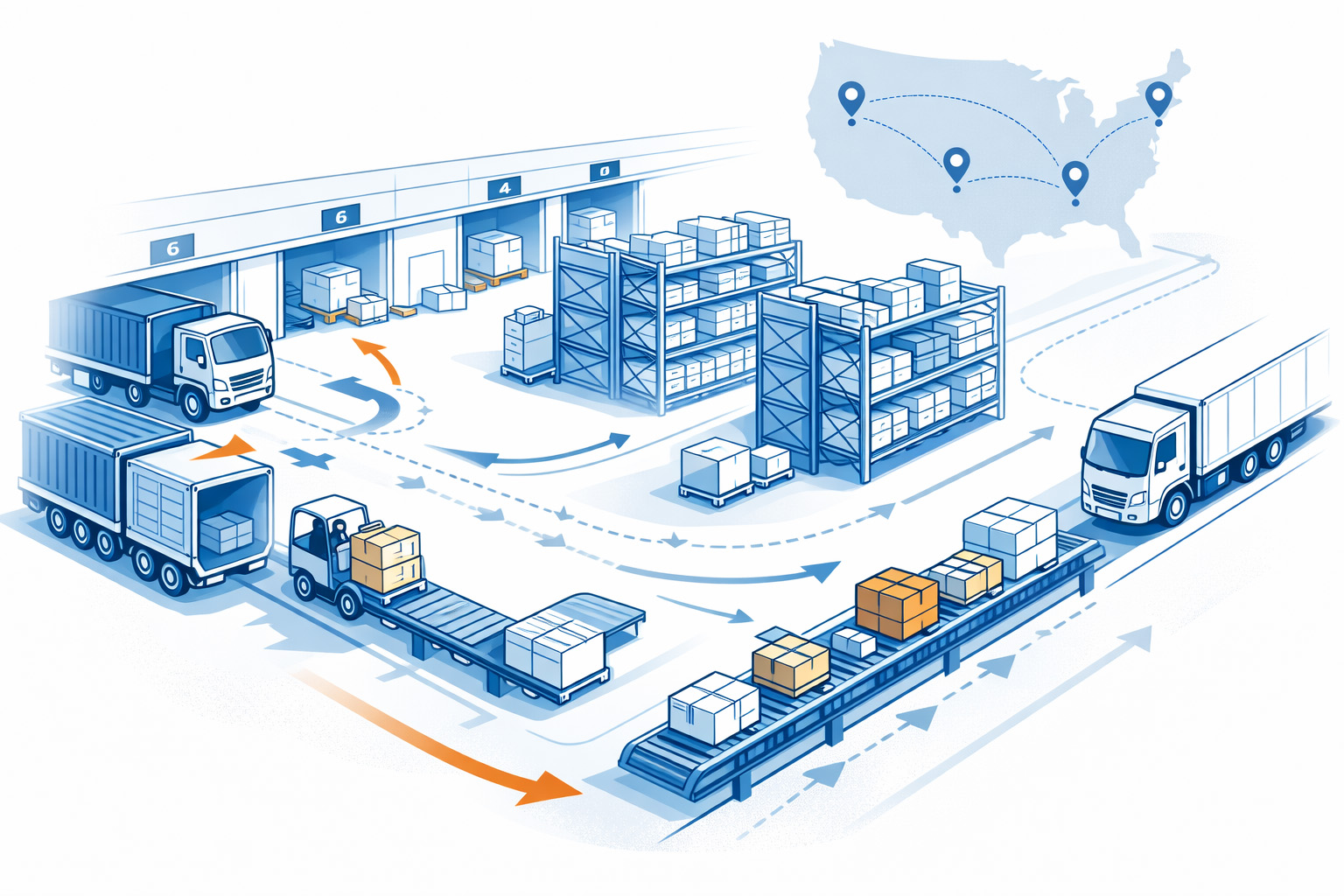
What a Scalable U.S. Fulfillment and 3PL Model Should Deliver
A fulfillment partner built for U.S. scale does not just move faster. It removes the need for constant oversight.
At a structural level, scalable U.S. fulfillment delivers:
- Disciplined receiving processes once goods clear customs
- Inventory control built on scan accuracy, not assumption
- Systems that integrate cleanly with ERPs and U.S. sales channels
- Workflows that release orders automatically
- Consistent execution across multiple U.S. warehouse locations
This is how fulfillment absorbs complexity instead of pushing it back onto the importer.
How Enterprise Order Solutions Supports Importers Shipping into the U.S.
Enterprise Order Solutions is built specifically to support importers shipping into the U.S. market at scale.
Not as a standalone warehouse. Not as a transactional 3PL. But as an execution layer that connects overseas supply chains, including China-based manufacturing, directly into disciplined U.S. fulfillment operations.
EOS provides:
- Integrated China-to-U.S. logistics infrastructure
- Predictable inbound receiving at U.S. warehouses
- Accurate, timely inventory visibility
- Dependable order fulfillment
- Flexible WMS integration
- Multi-location execution across the United States
With more than ten years of fulfillment experience, EOS understands that reliability is not created by reacting faster. It is created by designing systems that do not require reaction in the first place.
That discipline starts even earlier in the flow, especially where container receiving and warehouse intake determine how quickly imported inventory becomes usable inside the U.S. operation.
Frequently Asked Questions About U.S. Fulfillment for Importers
What is predictable fulfillment for U.S. importers?
Predictable fulfillment means inbound shipments are received on schedule, inventory becomes visible quickly and accurately, and orders release without manual intervention once goods arrive in the United States.Why do fulfillment issues often appear after goods arrive in the U.S.?
Post-clearance execution, including receiving, storage, and order fulfillment, is where delays and inventory inaccuracies typically surface if warehouse processes are not designed for scale.When should an importer consider replacing their 3PL?
An importer should consider replacing their 3PL when fulfillment requires constant oversight, inventory data cannot be trusted without verification, or receiving delays impact order release and customer commitments.How does a scalable 3PL reduce operational risk?
A scalable 3PL reduces operational risk through disciplined receiving, accurate scanning, integrated systems, and standardized workflows that absorb complexity without manual intervention.What should importers expect from a U.S. fulfillment partner at scale?
Importers should expect reliable receiving, accurate inventory visibility, automated order fulfillment, and consistent execution across U.S. warehouse locations.Return to Importer Logistics Resources
This completes the current importer article series. Return to the importer logistics hub, or explore the full EOS logistics guide library.Discover more from Enterprise Order Solutions
Subscribe to get the latest posts sent to your email.