How to Choose the Right Container Receiving Warehouse for Freight Forwarders
Welcome to EOS Logistics Knowledge Guide.
Article Introduction
A container is released. The drayage appointment is set. The truck is moving inland.
From the outside, it may look like the hardest part is over.
But freight forwarders know better.
For freight forwarders, choosing the right container receiving warehouse is one of the most important decisions in the port-to-warehouse handoff. The receiving warehouse will either protect the transition from transportation into execution—or become the next source of delay, confusion, and avoidable friction.
In the first article in this series, we explained why reliable container receiving warehouses matter. In the second, we looked at how warehouse delays can increase demurrage, detention, and container dwell time. This article answers the next practical question:
How do freight forwarders choose the right receiving warehouse before those problems begin?
Why Choosing the Right Container Receiving Warehouse Matters for Freight Forwarders
By now, the stakes should be clear.
When warehouse timing breaks down, the damage does not stay at the dock. Costs rise, visibility weakens, and pressure spreads across the shipment. What looked like a simple handoff can quickly become a larger logistics problem.
That is why this decision matters so much.
In Article 1, we explained why reliable container receiving warehouses matter to freight forwarders. In Article 2, we showed how warehouse delays can increase demurrage, detention, and container dwell time. Together, those two realities lead to the question this article is here to answer:
How do freight forwarders choose the right receiving warehouse before those problems begin?
At EOS, this is not theoretical. For more than a decade, EOS has seen what happens when clients turn to a new 3PL after another provider failed to protect execution at the warehouse level. The pattern is familiar: missed appointments, reactive communication, weak visibility, and too many handoffs between teams that do not truly own the outcome.
In many cases, the warehouse relationship was treated like a transaction when what the client actually needed was a partner.
Most 3PL relationships in the market are built around transactions: space, rates, and basic service. EOS is built differently. We value partnerships over transactional service because freight forwarders and importers need more than a building. They need a system that understands the shipment, protects the handoff, and helps guide freight toward the right outcome.
Because the right receiving warehouse is not just the one that says yes to the load. It is the one that helps the freight forwarder deliver a calmer, more successful result.
What Freight Forwarders Need From a Container Receiving Warehouse
Freight forwarders are not just looking for a warehouse that can accept inbound freight.
They are looking for a warehouse partner that can receive containers without introducing new uncertainty.
That distinction matters because many warehouse choices are still made on transactional terms. A low rate, available space, or a quick yes can look attractive in the moment. But freight forwarders do not succeed because a warehouse looked acceptable on paper. They succeed because the operation performs when execution matters.
At this stage of the shipment, what matters most is straightforward.
- ▶️ Reliable appointment scheduling. Forwarders need warehouses that can commit to realistic receiving windows and honor them consistently.
- ▶️ Efficient dock operations. The facility must be able to unload containers efficiently, handle palletized and floor-loaded freight, and keep trucks from sitting in avoidable delays.
- ▶️ Clear communication. Forwarders need timely answers when schedules shift, unloading starts late, or conditions at the dock affect the rest of the plan.
- ▶️ Inventory visibility. Once freight moves into the warehouse, forwarders and their customers need confirmation that it has been received, processed, and entered into inventory.
- ▶️ Consistency under pressure. A warehouse should not perform well only on easy days. It should perform when schedules tighten, multiple containers arrive, and real-world inbound complexity shows up.
That visibility reduces the confusion that often grows when warehouse execution disconnects from downstream fulfillment. That same lack of execution discipline is one reason fulfillment problems grow after cargo reaches the warehouse.
That is what freight forwarders actually need.
Not just space. Not just a dock. Not just a lower bid.
They need a container receiving warehouse partner that helps turn inbound freight into controlled execution.
Warning Signs of the Wrong Container Receiving Warehouse Partner
The wrong warehouse partner rarely looks wrong at the beginning.
At first, the issues seem small: an appointment takes too long to confirm, a delivery window moves without much explanation, a driver arrives on time but unloading does not begin, or inventory confirmation takes too long to appear.
Individually, these may seem manageable.
But experienced freight forwarders know those signs usually point to something larger underneath.
This is where transactional 3PL decisions often become risky.
A provider may win the load because the rate looked attractive, the location seemed convenient, or the answer came quickly. But if the operation behind that quote is inconsistent, reactive, or difficult to work with, the true cost appears later.
One warning sign is inconsistent appointment discipline. If receiving windows are vague or frequently rescheduled, the warehouse is introducing uncertainty into a process that depends on timing.
Another is slow or unclear communication. When a warehouse is hard to reach, slow to confirm arrivals, or unable to clearly explain delays, the forwarder absorbs more pressure from carriers, trucking partners, and customers. That same coordination gap is one reason cross-border logistics becomes harder to control after cargo reaches the United States.
A third warning sign is weak dock readiness. Some warehouses can handle inbound freight in theory, but struggle when conditions become more demanding—floor-loaded containers, multiple appointments, delayed arrivals, or changing schedules.
And perhaps the biggest warning sign is poor visibility after unloading begins. If freight forwarders and their customers cannot quickly confirm that cargo has been received, verified, and entered into inventory, confidence starts to break down.
That is how the wrong container receiving warehouse partner usually reveals itself.
Not through one dramatic collapse.
But through repeated friction at the exact stage where freight forwarders need control the most.
And over time, that friction costs more than the original savings ever justified. It costs time, consistency, confidence, and eventually customer trust.
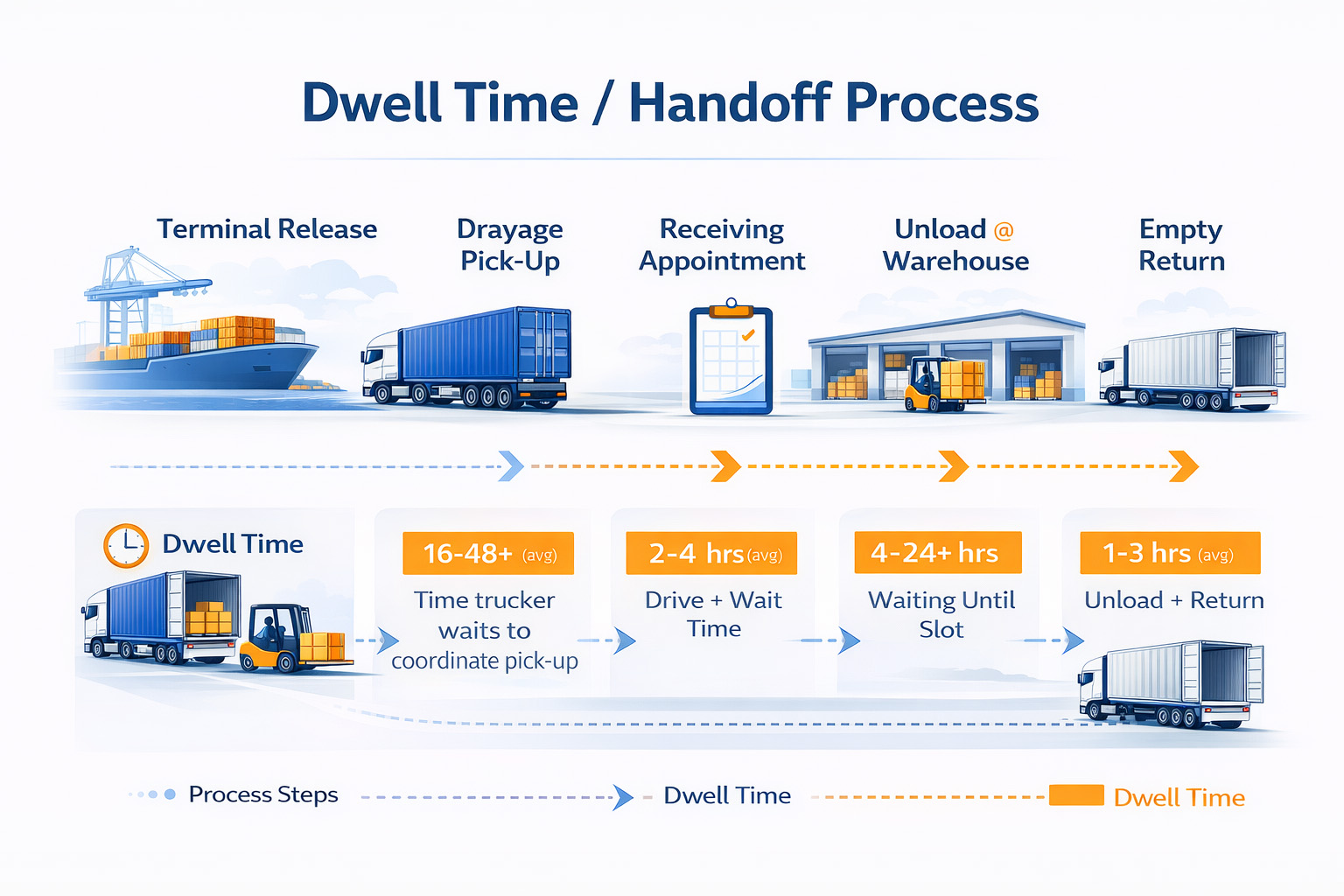
What a Reliable Container Receiving Warehouse Looks Like in Practice
A reliable container receiving warehouse does more than accept freight.
It creates confidence at the point where freight forwarders need the most control.
That confidence comes from execution.
Before the container even arrives, delivery appointments are managed with discipline. Dock schedules are realistic. Communication is clear. Everyone involved understands what is arriving, when it is arriving, and what needs to happen once the container reaches the facility.
At the dock, the operation is prepared to execute, not improvise. The team can handle inbound containers efficiently, whether the shipment is palletized, floor-loaded, or operationally complex. The warehouse is not reacting to the truck at the gate. It is ready for the load.
That readiness matters because freight forwarders are measured by whether cargo actually moves. When the receiving operation is organized, unloading begins on time, inventory is verified accurately, and the shipment transitions into the warehouse system without unnecessary friction. The same discipline is what makes downstream fulfillment operations more predictable once inventory enters the warehouse network.
A strong receiving partner also provides visibility, not silence. Forwarders and their customers should not be left guessing whether freight has been received, whether unloading has started, or whether inventory has been entered into the system.
And just as importantly, a strong warehouse partner performs this way consistently.
That is the difference between a warehouse transaction and a warehouse partnership.
A transaction may solve today’s delivery. A partnership helps protect tomorrow’s shipment, next month’s relationship, and the long-term customer experience.
Over time, that difference becomes obvious: less friction, better communication, more stable execution, stronger customer satisfaction, and healthier margins built on consistency rather than chaos.
That is what freight forwarders are really looking for.
Not just capacity. Not just location. Not just a lower rate.
They are looking for a reliable container receiving warehouse that helps protect execution when it matters most.
Why EOS Is the Right Container Receiving Warehouse Partner for Freight Forwarders
This is where freight forwarders stop looking for a warehouse that can simply take a container and start looking for a partner that can protect execution.
That is exactly where EOS is built to help.
Enterprise Order Solutions is not positioned around generic warehouse space. EOS is built around the operational transition that happens when containers leave the port, move through drayage scheduling, arrive at the dock, and need to become visible, usable inventory without creating new disruption.
That matters because the transition between transportation and warehouse execution is where many forwarders lose visibility, time, and momentum. EOS is designed to reduce that friction through structured receiving workflows, disciplined dock coordination, inventory processing, and communication that supports real operational decision-making.
In Southern California, that control can be strengthened further when inbound container movement is supported through Enterprise Trucking Solutions (ETS), an EOS-operated transportation service. ETS is not the starting point of the value proposition, but it does provide an additional advantage: fewer handoffs, better alignment between drayage timing and warehouse appointments, and earlier visibility before the container reaches the dock.
The result is a warehouse partner for freight forwarders built around what the work actually requires: clear appointments, disciplined intake, operational visibility, and execution that supports the next stage of the shipment instead of slowing it down.
This is also where EOS separates itself from the reputation many 3PLs create in the market.
A transactional provider may help on a single move. A true logistics partner helps reduce friction over time.
That difference may not always be obvious on one transaction. But over the long term, the savings become clear through smoother execution, fewer disruptions, stronger customer relationships, and healthier margins. Better visibility, stronger communication, and sound operating practices do more than move freight. They improve the experience your customers have with you.
That is why freight forwarders who need more than basic warehouse space should look closely at how EOS supports container receiving in practice. Explore EOS Warehouse Receiving & Inventory Control to see how structured receiving, visibility, and coordination can help protect one of the most sensitive transitions in your logistics pipeline.
Because once inbound freight is received correctly, the next operational opportunity is not just storage. It is deciding how that freight should move deeper into domestic distribution with as little friction as possible.
FAQ: How Freight Forwarders Choose the Right Container Receiving Warehouse
How do freight forwarders choose the right container receiving warehouse?
Freight forwarders should evaluate appointment discipline, dock operations, communication, floor-load handling capability, inventory visibility, and consistency under pressure. The right container receiving warehouse helps protect the handoff from drayage delivery into organized warehouse execution.
What should freight forwarders look for in a container receiving warehouse?
Freight forwarders should look for reliable appointment scheduling, efficient dock operations, clear communication, floor-load handling capability, inventory visibility, and consistent execution under pressure. The right partner should help containers move smoothly from drayage delivery into warehouse inventory without creating new delays.
Why is communication so important when choosing a receiving warehouse?
Because small delays become larger problems when no one has clear answers. Forwarders need timely updates on appointment changes, unloading progress, inventory confirmation, and any issue that could affect downstream scheduling.
Can a warehouse have space available and still be the wrong partner?
Yes. Available space does not guarantee strong receiving execution. A warehouse may have room for freight but still struggle with dock discipline, unloading speed, labor readiness, or inventory visibility. Forwarders need operational reliability, not just capacity.
How can freight forwarders tell if a warehouse is operationally disciplined?
Warning signs include vague appointments, frequent rescheduling, slow response times, weak confirmation processes, and poor visibility after unloading begins. A disciplined receiving warehouse should have structured workflows, consistent dock coordination, and clear communication from arrival through inventory processing.
Why does inventory visibility matter to freight forwarders?
Because once cargo reaches the warehouse, forwarders and their customers need confirmation that it has been received, verified, and entered into inventory. Without that visibility, the warehouse becomes a blind spot in the shipment rather than a controlled transition point.
Does EOS only provide warehouse space, or does it help manage the receiving process too?
EOS is built to support the receiving process itself. That includes structured warehouse intake, dock coordination, inventory processing, and communication that helps freight forwarders maintain control as containers move from port logistics into warehouse execution.
How does Enterprise Trucking Solutions (ETS) support freight forwarders?
In Southern California, ETS can strengthen coordination between drayage timing and warehouse receiving appointments. That can reduce handoffs, improve visibility before container arrival, and help freight forwarders manage the transition from port release to warehouse intake more smoothly.
What is the next step if a freight forwarder wants EOS to review their receiving process?
The best next step is to review EOS Warehouse Receiving & Inventory Control and start the conversation with the EOS team. That allows EOS to review your current receiving workflow, identify coordination risks, and recommend a warehouse execution approach that supports your freight plan more effectively.
Return to the Knowledge Guide
Return to the EOS logistics guide to understand the full framework behind container receiving, warehouse intake, and freight forwarder coordination.
Return to Freight Forwarder Guide