

Estimated read time: 8 min
Many businesses ship effectively without a dedicated transportation management system when their order mix is simple. The difficulty grows as parcel, freight, customer accounts, buyer routing rules, delivery windows, and status requests compete for attention. This article shows where the work becomes harder to control, what a basic shipping tool may leave unresolved, and how to recognize the point where transportation planning needs a more connected process.
Your Team Can Ship Orders and Still Lose the Day
In the first article, we saw how a transportation management system can help you price a freight move before committing, then plan and follow it after the warehouse prepares the order. Now picture a busy Tuesday without a shared transportation view.
At 8:30, your warehouse has a pallet ready for a retail buyer. Someone checks the buyer’s routing guide, then emails a carrier for a rate. At 9:15, customer service asks whether yesterday’s parcel has left the building. The label exists, but the first carrier scan has not appeared. At 10:00, a sales manager asks for delivered prices on a new wholesale account with three destinations. The team can find rates in carrier portals, but still has to check which quotes remain valid and whether each service fits its buyer’s date.
None of this means your team is failing. Each person is doing a reasonable part of the job. The strain comes from having to assemble the same shipment story from separate places every time a decision matters.
What happens when the day brings twenty of those decisions instead of three?
The Work Hiding Behind “Just Ship It”
The final shipment choice needs more than an address and a box count. Your team may have to decide:
- Which shipping mode fits the size and handling needs.
- Which carrier serves the destination and required delivery window.
- Whether the buyer requires a preferred carrier or routing process.
- Whether the customer supplied an account or label.
- Whether the shipment needs an appointment, liftgate, or other service.
- Whether pickup can happen before the dock cutoff.
- Which status must be sent back to a marketplace, buyer, or customer.
When one person knows all of those answers, the process can look easy. When that person is absent, the shipment still has to move. The risk is that the rule lives in someone’s memory rather than in a repeatable workflow.
A Rate Can Look Good Until the Full Shipment Is Visible
A quoted rate is useful, but it is not a complete transportation decision. Maybe the service does not fit the delivery promise. Maybe the location requires an appointment or liftgate. Maybe the pallet dimensions were estimated before the warehouse finished building it. Maybe a retailer will not accept the chosen carrier or label format.
The cost then appears later as a correction, accessorial, rebooking, redelivery, delay, or hours spent explaining what happened. Not every shipment produces one of these costs. The point is that the initial quote can conceal requirements that were already known elsewhere in your operation.
This is why a growing business should compare the total job rather than only the first price. The transportation question is not simply, “Who is cheapest?” It is, “Which option can deliver this particular order as promised, with the fewest avoidable surprises?”
Why Basic Shipping Tools May Miss LTL Freight Requirements
A parcel platform may do exactly what your business needs for ordinary direct-to-consumer orders. It can create labels and expose useful rates and tracking. Keep using a tool that works.
The gap shows up when the same business must coordinate LTL freight, buyer-routed pallets, appointment deliveries, customer-provided labels, regional moves, and parcels in the same week. Different systems or carrier portals may own different pieces. A spreadsheet may become the place where people reconcile them.
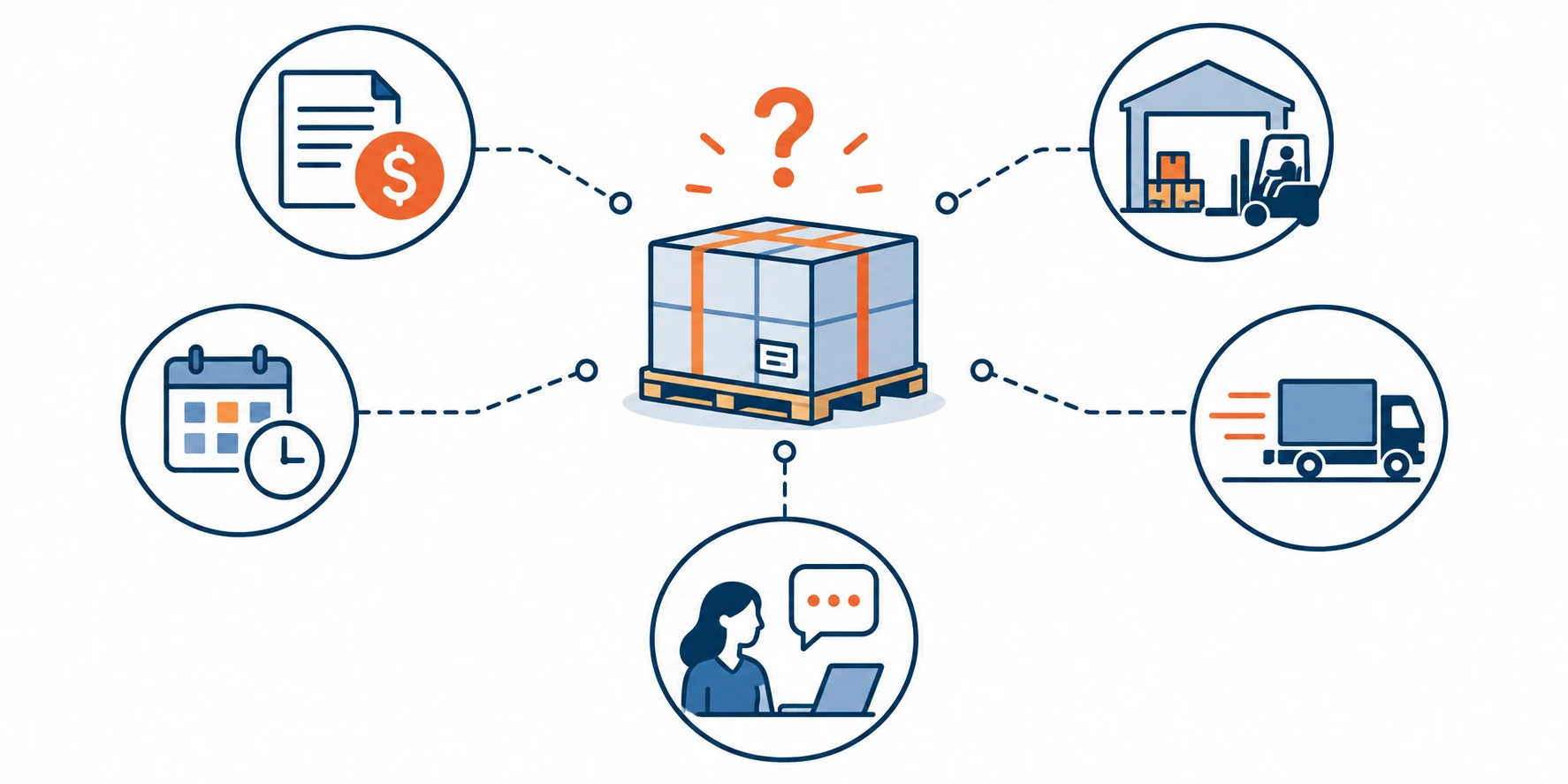
The most important question is whether those pieces produce one trustworthy shipment record. Can you see the order requirement, warehouse release, carrier decision, pickup, current status, and exception owner together? Or does someone rebuild that sequence by checking inboxes?
The second model can work for a while. It becomes harder to protect as volume and variation rise.
When the Warehouse Is Ready but Pickup Is Not
The scanning, WMS, and OMS series brought us to a clean, prepared order. That is a strong start. It does not guarantee the transportation handoff.
Picture a wholesale pallet that has been scanned, wrapped, and staged. The buyer requires a delivery appointment. The warehouse closes at a fixed time. The carrier has capacity tomorrow, but the appointment is not confirmed. Booking the truck too early creates a problem at destination; booking too late leaves finished freight on the dock.
The missing piece is a coordinated decision: when is the shipment truly ready to move, and who has confirmed the next step? A transportation workflow should connect the warehouse release to the pickup and delivery plan. Otherwise, accurate inventory and order data may still lead to an avoidable delay.
How Freight Visibility Gaps Become Customer-Service Work
Your customer does not care which system holds the answer. They want to know whether the order shipped and when it will arrive.
A label-created event is not the same as a carrier pickup. A pickup is not the same as an on-time delivery. An estimated arrival is not proof of delivery. Those distinctions matter when a business makes promises or investigates an exception.
Without a clear shipment record, customer service may have to ask the warehouse, the shipping desk, the carrier, and the account manager for one answer. Sometimes the answer changes while they are still gathering it. The delay costs time, and it can make an otherwise competent operation look uncertain.
Useful transportation visibility should tell the team what is known, when it was last confirmed, and what action is needed next. It should not turn a status estimate into a false promise.
The Cost of Manual Coordination Is More Than Postage
Transportation costs include more than carrier invoices. Re-entering shipment data, checking portals, chasing status, correcting documents, rebooking pickups, and explaining delays all consume time. Buyer trust and internal focus are harder to put on an invoice but still affect the business.
That does not mean automation should decide everything. A special delivery, urgent exception, or unusual freight move still needs a human who understands the customer’s priorities. The goal is to make normal decisions consistent so the team has time for the shipments that need judgment.
You should be able to ask, “Why did we choose this service?” and get a useful answer without reconstructing the day from emails.
How to Know the Process Has Outgrown Its Tools
Look for repetition, not one bad day. Your company may need a stronger transportation process when:
- Shipment data is entered more than once.
- Carrier choice is explained after the fact rather than recorded beforehand.
- Freight and parcel status live in separate, hard-to-reconcile places.
- Buyer routing instructions are checked only when a problem appears.
- Warehouse teams often wait on pickup or appointment decisions.
- Customer service cannot distinguish label creation from actual movement.
- Exceptions rely on a single person to notice and escalate them.
If those patterns are becoming familiar, the question is not whether your team works hard enough. It is whether the operating model gives them enough shared information to make good decisions at the pace your business now requires.
The final article will look at what to ask of a 3PL transportation model, including how order requirements, warehouse proof, carrier coordination, delivery events, and people should work together.
Frequently Asked Questions
When does manual transportation planning stop scaling?
Manual planning becomes harder to sustain when shipment details are entered repeatedly, buyer requirements depend on memory, carrier and delivery status are scattered, or routine decisions take too long to confirm. Shipment variation can create this pressure even before overall volume is high.
How can a missed pickup affect a B2B delivery?
A missed pickup can leave warehouse-ready pallets on the dock, put a buyer’s receiving appointment at risk, and force the team to rebook transportation or revise its delivery promise. The cost depends on the shipment and buyer requirements, but the delay can also create customer-service work before the freight even moves.
Why can the lowest LTL quote cost more later?
A low linehaul quote may exclude services the shipment needs, such as an appointment or liftgate, or may use assumptions about pallet size and weight that change after preparation. Compare the complete service and likely accessorials against the buyer’s delivery requirements before choosing.
What is the first sign that transportation visibility is weak?
A common sign is that the team cannot answer a straightforward shipment question from one reliable record. If confirming pickup, current status, or an exception requires several calls and portals, the information is too fragmented for the business’s current needs.
How a 3PL Transportation Management System Connects Orders, Carriers, and Delivery
The final guide examines how prepared orders, carrier decisions, delivery events, and people work together in a 3PL transportation model.
Discover more from Enterprise Order Solutions
Subscribe to get the latest posts sent to your email.

1 Comment
3PL Transportation Management: Quote to Delivery | EOS
October 8, 2026[…] the previous article, we saw how transportation work becomes harder when every carrier choice, pickup, and shipment […]