

Estimated read time: 9 min
A transportation management system, or TMS, helps your business estimate freight before committing to a sale, plan the move, choose an appropriate service, and follow the shipment through delivery. This guide is for growing B2B sellers, importers, and distributors who need a reliable way to turn an available pallet into a delivered promise their buyer can trust.
The Buyer Wants Two Pallets in Houston
Your business has a promising wholesale opportunity. A buyer in Houston wants two pallets and asks for a delivered price and a date. You know the inventory is available. You can see the sale taking shape.
Now you need a freight answer before you can give the buyer yours.
What will the move cost? How long is that quote valid? Can the service meet the date? Does the buyer require a particular carrier, label, or delivery appointment? Those questions affect the price you offer, the margin you keep, and the promise you make.
If you have ever hesitated before giving a buyer a delivered price, that hesitation is reasonable. A small error in the freight plan can turn a good sale into rework, an unexpected charge, or an uncomfortable call about delivery. You need facts while the opportunity is still open, not only after the order is booked.
Our earlier barcode scanning, WMS, and OMS guides followed inventory and orders through the warehouse. They explain how your team can know what is available and what has been prepared. Transportation adds the next question: how does that verified product reach the buyer on terms your business can stand behind?
After working with many bulk customers, EOS has seen that the hardest transportation decision can arrive before a freight order exists. That is where a transportation management system enters the story. It helps the seller evaluate the move, then coordinate it once the buyer is ready.
What Does a TMS Actually Do?
A TMS is a tool for planning, coordinating, and monitoring the movement of goods. It brings shipment requirements and transportation options into a process your team can use before booking and during delivery. Depending on the product and operating model, it may help you:
- Estimate freight using shipment details and delivery requirements.
- Compare appropriate modes, carriers, services, rates, and transit expectations before committing.
- Apply customer or buyer routing rules.
- Plan and schedule a carrier handoff when the shipment is approved.
- Produce or coordinate shipment documents and labels.
- Follow pickup, transit, delivery, and exception status.
- Review transportation performance and recurring cost patterns.
The two-pallet quote is the first useful moment. You can evaluate the freight cost and service without treating the inquiry as a final shipping instruction. If the sale goes ahead, the same shipment facts can support a plan, carrier decision, pickup, and status updates. The exact capabilities vary by system, so ask how the process works rather than assuming every feature is automatic.
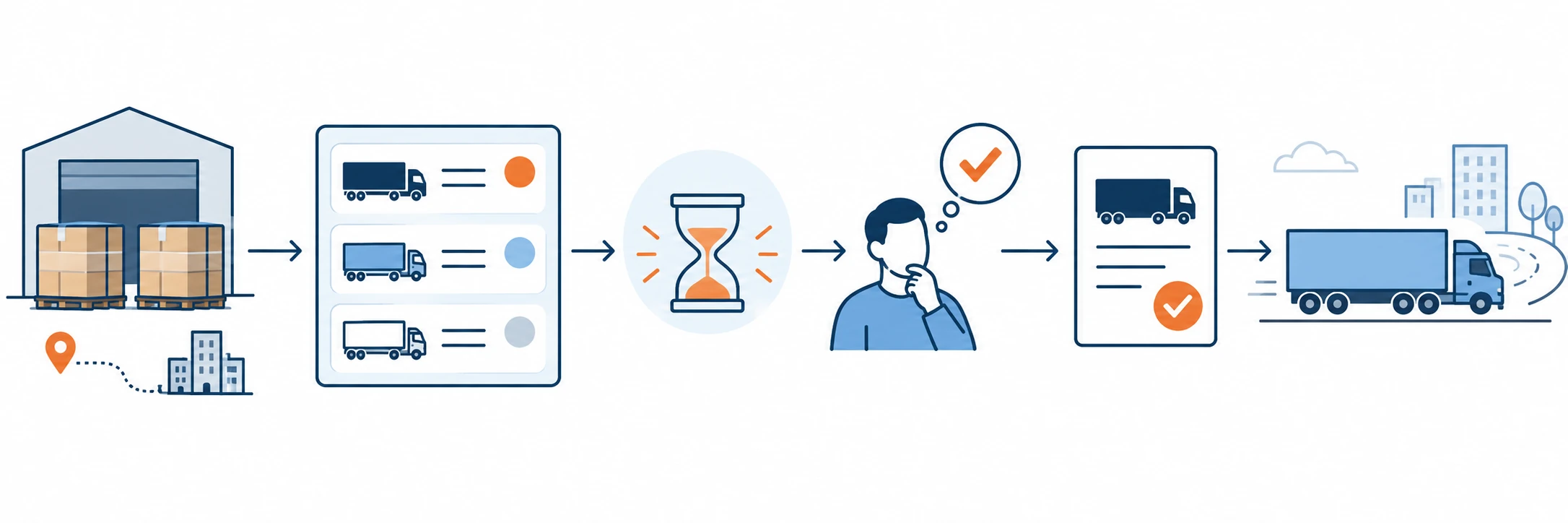
For an occasional parcel, a shipping portal may be enough. When your business moves palletized LTL freight to multiple buyers, each with its own deadlines and receiving rules, the work is more varied. A useful TMS gives you and your team a shared place to examine that wider transportation decision.
Where TMS Meets OMS, WMS, and Warehouse Scanning
Your freight estimate needs good inputs. The OMS helps organize the order and the buyer’s requirements. The WMS supports the work that receives, stores, picks, and prepares inventory. Barcode scanning helps confirm the physical details as that work happens.
Before the sale, you may already know the destination, planned pallet count, and requested date. Those facts help you price the freight. Once the buyer commits and the warehouse prepares the actual shipment, confirmed weight, dimensions, count, and readiness can strengthen the transportation plan. The TMS helps your team move from estimate to execution and monitor the trip that follows.
That handoff can expose a gap. The quote may have assumed two standard pallets, but the warehouse confirms a different size. The buyer may request an appointment after the initial discussion. A carrier may not serve the destination on the required date. The right system should make those changes visible so a person can review their effect before the shipment moves.
When the order, warehouse, and transportation views agree, your business has a better chance of choosing a service that fits the real shipment. When they disagree, your team can resolve the difference before pickup rather than explain it after the buyer is waiting.
The Lowest Rate Is Not Always the Best Shipment Decision
Imagine two options for your Houston buyer. One carrier offers a lower linehaul price but cannot meet the receiving appointment. Another costs a little more and fits the delivery window. The second may protect the sale more effectively, even though its first number is higher.
The cheapest number on the first screen may not be the lowest total cost. A missed appointment, redelivery, detention, accessorial charge, damaged freight, or unhappy buyer can change the result.
That is why the quote’s validity matters. If it expires before your buyer makes a decision, your team may need to check the rate again. A useful transportation process keeps that timing clear; it does not force you to create a freight order merely to find out whether the sale works.
The same principle applies when your business also ships parcels. The delivery promise, destination, package profile, carrier preference, insurance needs, or marketplace deadline may change the best option. The right choice depends on the job.
A capable transportation workflow makes those factors visible before the label is printed or the carrier is booked. It also leaves room for customer-supplied accounts and buyer routing instructions when those are part of the agreement.
How Transportation Technology Has Changed
Transportation planning once leaned heavily on phone calls, email, rate sheets, and individual experience. Those tools still have a place, especially when a shipment is unusual. The difficulty comes when your team has to rebuild each ordinary answer: what the shipment costs, when the quote expires, which carrier fits, and whether the buyer’s rule was followed.
Modern TMS products can bring orders, carrier information, rules, shipment events, and performance records into a more connected workflow. Some support automated comparison, tendering, route planning, or alerts. The exact features vary. A system is useful when it helps your people answer the next real question accurately and act on it.
That is why the evolution of TMS is more than a change from paper to software. It is a change in how a business makes transportation decisions repeatedly, records them, and responds when reality changes.
What Visibility Should Mean After Pickup
Suppose the Houston buyer accepts your offer. The warehouse completes its scan checks, the pallets are staged, and a carrier is selected. The buyer’s next question is whether the freight is on its way.
A tracking number alone is a thin answer. Your team may also need to know whether the carrier accepted the shipment, whether pickup happened, whether an appointment is confirmed, whether delivery is at risk, and who is working an exception.
The answer will vary by carrier, shipping mode, and the information exchanged with the system. A parcel scan and an LTL status event are not identical. Nor is every status feed truly continuous. Ask what the status means and how often it is updated before promising a customer real-time visibility.
The benefit reaches the person who made the original promise. Customer service can answer with evidence, the warehouse knows when freight has actually left, and your business can respond before a delay becomes a surprise to the buyer.
When Should a Growing Business Pay Attention?
You do not need a large software project because one buyer asks for a freight quote. Pay attention when the same questions become harder to answer as your business grows:
- More than one mode or carrier is in regular use.
- Buyers have routing guides, appointments, or documentation requirements.
- Teams re-enter the same shipment data into several places.
- A low quote later becomes a costly exception.
- Customer service cannot tell what happened after warehouse handoff.
- Shipping decisions depend on one person’s memory.
If the current process is simple and dependable, that is useful information too. The point is to recognize when the way you make shipment decisions no longer supports the business you are becoming.
One buyer’s request can lead to a quote, a plan, and a delivery promise your team can follow. The next article explores what changes when more buyers, destinations, and exceptions arrive but those decisions still live in separate places.
Frequently Asked Questions
What is the difference between a TMS and a shipping label tool?
A label tool helps create a shipment label and may compare parcel services. A TMS can cover a broader transportation workflow, including shipment planning, mode and carrier selection, routing rules, freight handoff, tracking, exceptions, and performance review. Capabilities vary by product.
How does a TMS work with an OMS and WMS?
The OMS organizes the order and its requirements. The WMS helps execute and verify the warehouse work. A TMS uses the resulting shipment information to support transportation planning and follow the move toward delivery. The systems must exchange reliable data for the handoff to work well.
Does a TMS always choose the cheapest carrier?
No. A good transportation decision considers service, transit time, buyer rules, delivery windows, carrier fit, and total cost. The cheapest quoted rate can be the wrong choice if it cannot meet the shipment’s requirements.
Is a TMS only for large companies?
No. The need depends more on transportation complexity than company size. A smaller business with several modes, carriers, destinations, or buyer rules may benefit from a more structured process. A simple operation may be adequately served by a lighter tool.
What Business Logistics Look Like Without a Transportation Management System
See what changes when more buyers, destinations, and exceptions arrive but freight decisions still live in separate places.
Discover more from Enterprise Order Solutions
Subscribe to get the latest posts sent to your email.

1 Comment
Transportation Management System Considerations | EOS
October 1, 2026[…] the first article, we saw how a transportation management system can help you price a freight move before committing, […]