

Import Logistics Through Major U.S. Ports
When your inventory is ready to leave a China manufacturer, the U.S. warehouse plan should already be in motion. EOS supports the connected import journey: ocean freight planning, customs and entry coordination, EOS-managed drayage, container receiving and inventory ready for U.S. orders. Choose a port region to see how that journey connects to the EOS warehouse network.
EOS is built to improve your logistics operations, giving you full visibility and control.
The EOS partnership model provides warehouse infrastructure, proprietary software systems, and specialized divisions across multiple stages of workflows. The results are scalable growth and predictable execution so you can focus on business growth.
Choose Your U.S. Import Port Region
Choose a port region to see its EOS warehouse connection and the services available after receiving.
Los Angeles & Long Beach → Southern California.
Move from the port market toward EOS warehouses in Ontario and Jurupa Valley. Explore the ETS drayage handoff and eligible EOS Transportation services.
Explore Southern California Port Intake.Port Houston → Houston, Texas.
Connect inbound planning with EOS receiving and fulfillment in North Houston.
Explore Houston Port Intake.Port of Savannah → Hardeeville, South Carolina.
Position imports for warehouse receiving and Southeast distribution near the Savannah logistics market.
Explore Savannah Port Intake.Port of New York and New Jersey → Dayton, New Jersey.
Connect port arrival with receiving, fulfillment and distribution from Central New Jersey.
Explore Northeast Port Intake.From China Manufacturer to U.S. Fulfillment: The Import Journey
-
China manufacturer readiness.
Share the factory-ready date, cargo details and U.S. inventory plan while there is still time to align the destination operation.
-
Ocean freight.
Coordinate the shipment and U.S. arrival plan around the port market and warehouse needs.
-
Customs and U.S. entry.
Align documentation, responsible customs parties and expected release timing with downstream teams.
-
Port arrival and EOS-managed drayage.
EOS manages container movement after release. In Southern California, its ETS department uses its own equipment, operators and dispatch. EOS manages drayage in the other regions, with transportation resources confirmed for each shipment.
-
EOS container receiving and storage.
The regional warehouse unloads, checks and registers product, then stages or stores it according to the agreed process.
-
Fulfillment or B2B distribution.
Inventory becomes available for ecommerce, marketplace or wholesale orders and distribution planning.
Explore the EOS Warehouse Network
EOS locations are positioned across key U.S. regions to support receiving, storage, fulfillment, staging, crossdock, and distribution workflows. Explore the EOS warehouse network from West Coast receiving to East Coast distribution.
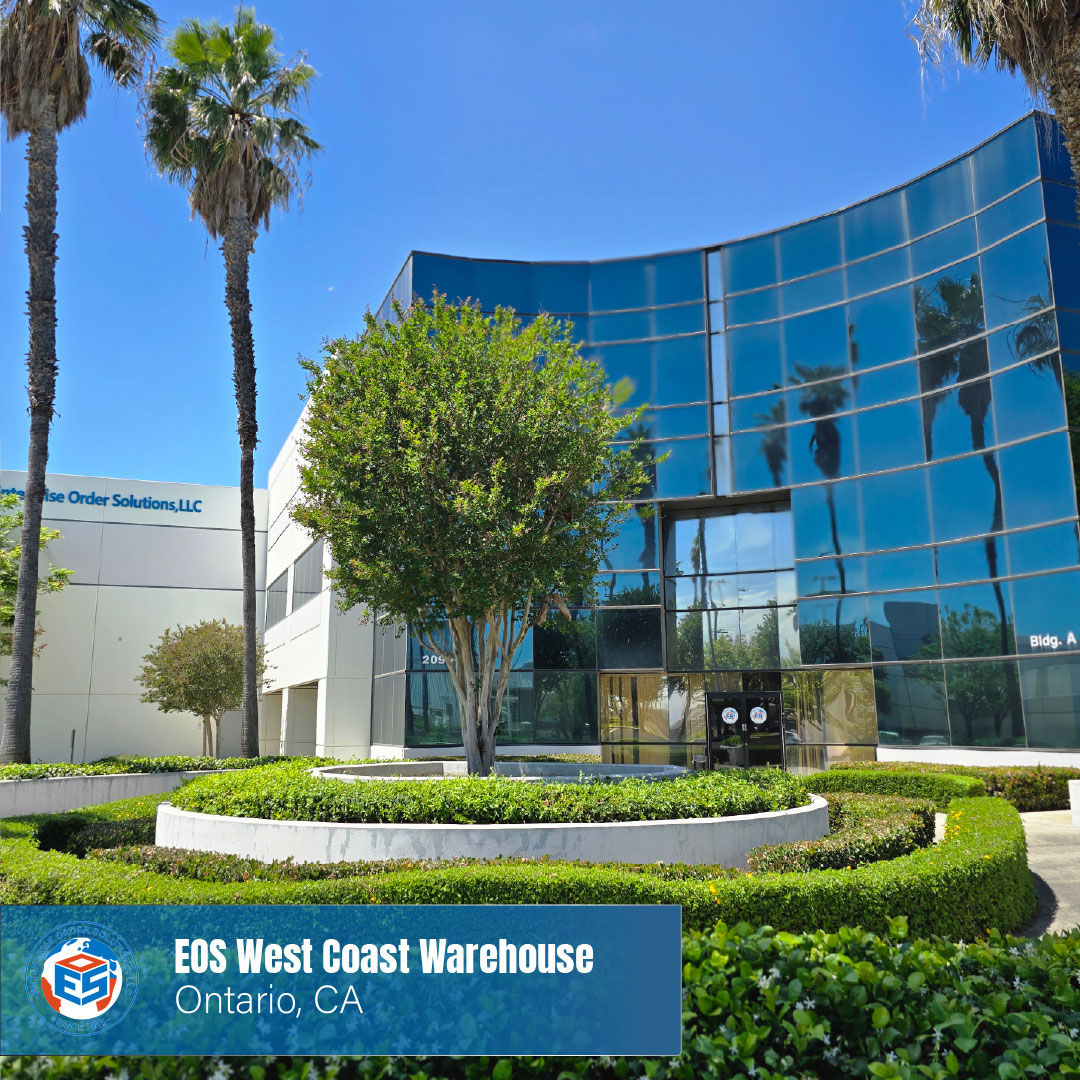
Ontario, California
- West Coast Order Fulfillment Execution
- Inland Empire Warehouse Operations
- EOS Headquarters and ETS Dispatch
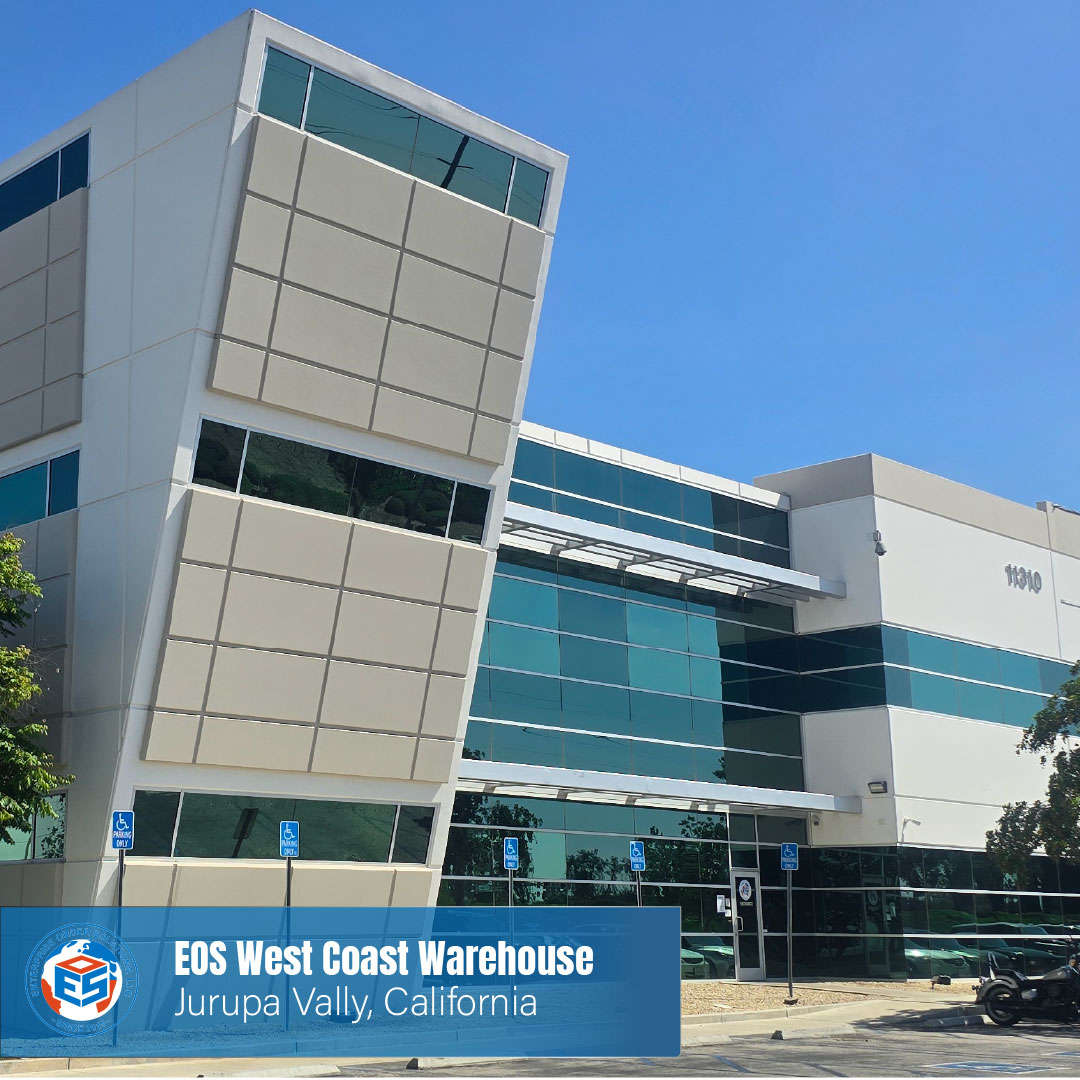
Jurupa Valley, California
- Southern California Order Fulfillment Execution
- Inland Empire Receiving and Distribution
- Regional Warehouse Capacity Near Freight Lanes
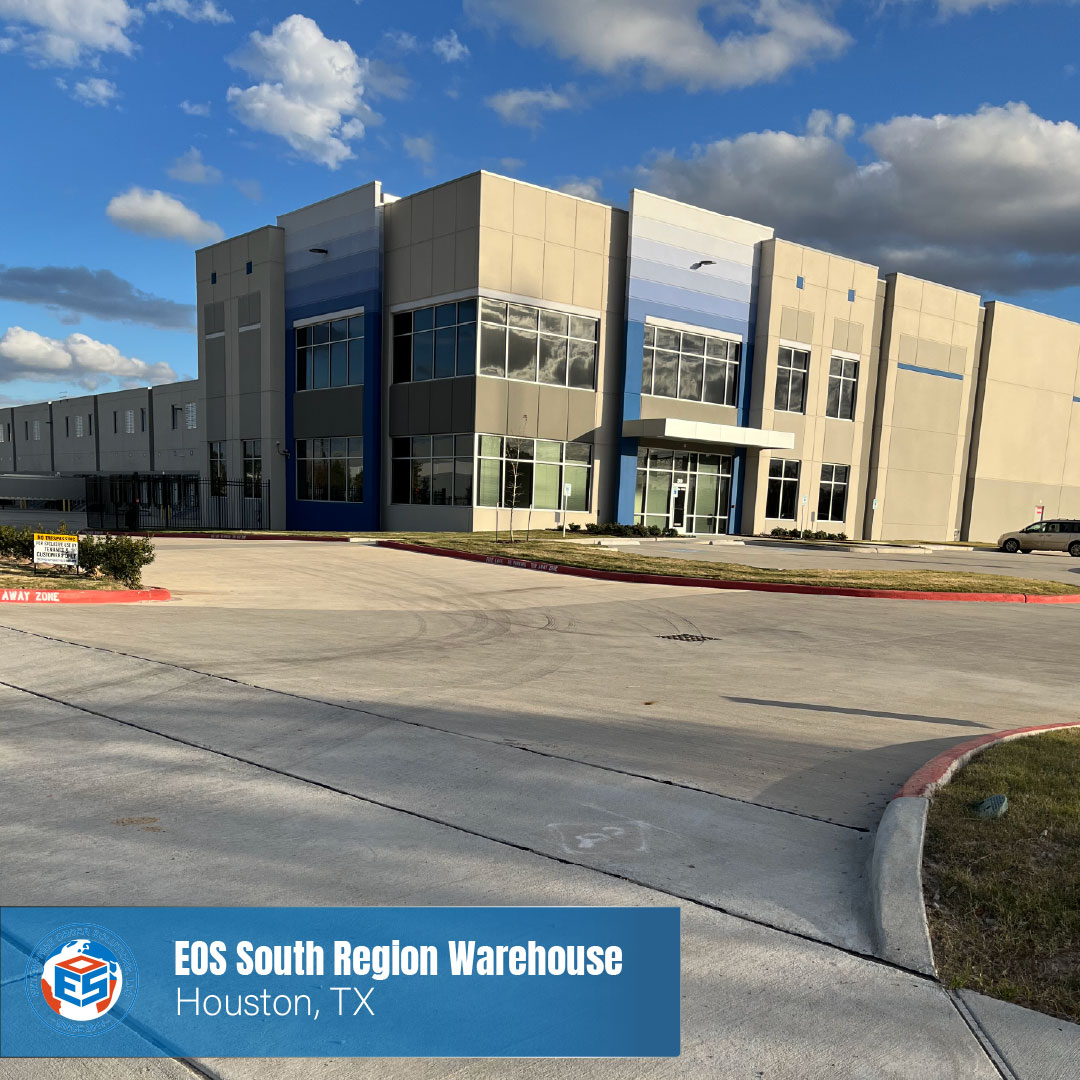
Houston, Texas
- South Region Order Fulfillment Execution
- Texas Warehousing and Distribution
- Gulf Coast Regional Fulfillment Access
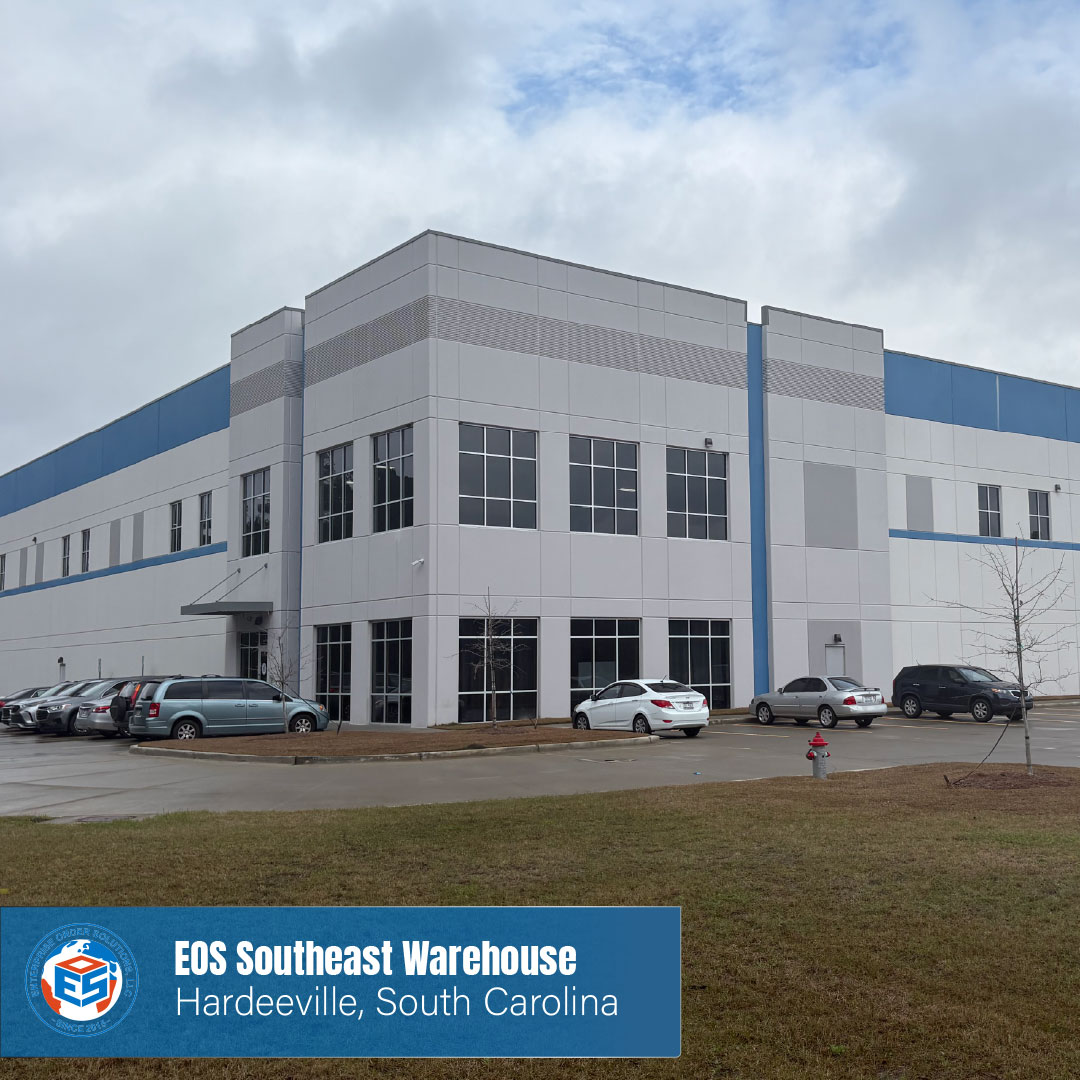
Hardeeville, South Carolina
- Southeast Order Fulfillment Execution
- South Carolina Warehousing and Distribution
- East Coast Regional Distribution Access

Dayton, New Jersey
- Northeast Order Fulfillment Execution
- New Jersey Warehousing and Distribution
- East Coast Customer Reach
Explore the EOS Solutions Workflow
EOS solutions are designed to support the full workflow from inbound freight and warehouse intake to fulfillment, distribution, and exception handling. Use the map below to explore connected capabilities across the EOS operating model.
Inbound Logistics & Port Execution
Port coordination, drayage, and inbound planning that move freight into warehouse execution.
View Solution →Warehouse Receiving & Inventory Control
Container intake, verification, and inventory registration that improve warehouse visibility.
View Solution →Fulfillment & Order Execution
Pick, pack, ship, and order execution for ecommerce, retail, and multichannel programs.
View Solution →Transportation & Distribution
Outbound freight coordination and routing that keep inventory moving to the next destination.
View Solution →Returns & Exception Handling
Returns and exception workflows that support inspection, rework, recovery, and resolution.
View Solution →Port Intake Questions
Can EOS support imports before the container arrives at a U.S. port?
Yes. For China-origin programs, EOS supports coordination beginning with the manufacturer handoff and ocean freight planning, then connects customs and entry coordination, EOS-managed drayage and U.S. warehouse receiving. The precise service scope and responsible partners are confirmed for each shipment.
Does EOS operate warehouses near major U.S. port markets?
EOS operates warehouses in Ontario and Jurupa Valley, California; Houston, Texas; Hardeeville, South Carolina; and Dayton, New Jersey. These locations support port-connected inbound planning in their respective regions.
Can EOS handle the work after a container is received?
Yes. Depending on the operation, EOS can evaluate storage, inventory control, ecommerce order fulfillment, B2B distribution, and returns or exception handling after receiving.
Which page should I use if my freight arrives in Southern California?
Start with the Southern California port intake page. It connects the Los Angeles and Long Beach port market with EOS warehouses in Ontario and Jurupa Valley and explains the regional transportation options.
Can EOS manage drayage outside California?
Yes. EOS manages drayage for port-connected programs across the regions shown here. In California, ETS is an EOS department with its own equipment, operators and dispatch. The transportation resources used in other markets are confirmed for each shipment.
What should I send EOS to plan an inbound program?
Share manufacturer readiness, China origin details, destination port, expected dates, container and product details, receiving requirements, warehouse needs, and whether inventory will move to ecommerce customers, wholesale destinations or another location.
Planning an Import Into the United States?
Tell us when your goods will be ready at the manufacturer, which U.S. port you plan to use and what needs to happen after receiving. We’ll review the warehouse and service fit with you.