
Estimated read time: 9 min
A 3PL returns management partner should help your business do more than receive unwanted packages. The right arrangement makes responsibility clear from the return address through product review, inventory status, and the next business decision. This guide helps growing sellers compare a dedicated returns service with a combined fulfillment-and-returns relationship, then ask the questions that reveal whether a provider can handle the work their business actually has.
What a 3PL Returns Management Partner Should Handle
The office has stopped being a workable place to receive customer returns. Your team has done the difficult part: it named the problem instead of treating each carton as a separate inconvenience. Now you need to decide what should change.
It is tempting to ask a provider, “Can we send returns to your warehouse?” That question might get a quick yes and leave you in the same position a month later. The earlier article on ecommerce returns management showed why the pressure is not only the number of packages. It is the variety of decisions that follow each arrival.
The better first question is: “What part of the return will you own, and what will my team still need to decide?” A useful answer starts before a label is printed and continues after a delivery scan. It accounts for the old address, the new destination, the product’s condition, the status your team sees, and the route from an uncertain return to a usable outcome.
This is also a chance to ask whether you need to replace your current fulfillment arrangement at all. A dedicated returns partner may solve the immediate gap. A combined provider may be a better fit if your forward and reverse flows need to operate together. Both paths deserve a fair evaluation.
Returns-Only Service vs. Combined Fulfillment and Returns
If your current provider handles forward orders well, you may not want to move storage and fulfillment merely because returns are weak. A returns-only partner can give the return path its own home and defined responsibilities while the rest of your logistics remains in place.
That model raises coordination questions. How will the returns partner identify the original order? How will your team learn what can be sold again? If a replacement must ship from another warehouse, who tells that provider which product is ready? A separate returns service can work, but the handoff between providers becomes part of your operating plan.
A combined fulfillment-and-returns partner puts the forward and reverse work under one service relationship. When both flows use the same facility and a returned product is approved for resale, it may go back into available inventory without a separate shipment to another fulfillment center. That can simplify inventory status, account rules, and exception ownership. The advantage depends on the actual facilities, systems, product types, channels, and service the provider agrees to deliver.
The decision is not “one vendor is always better than two.” It is whether the model gives your business clear ownership at the moments when a product changes direction. You should be able to describe one ordinary return and one difficult one without relying on a person who happens to remember how the last problem was solved.
How to Evaluate a 3PL Returns Processing Workflow
Bring a real example to the provider conversation. A customer returns a home product after deciding it does not fit the room. The parcel reaches the proposed destination. What happens now?
First, ask how the team knows it has arrived and how it connects the package to the order or authorization. Then ask what condition information your business will receive. Is the product complete? Has it been opened? Is it suitable for resale under your rules, or should it remain on hold while your team decides what comes next?
Do not settle for a general promise of “visibility.” Ask which status marks the item as received, still under review, available, or unresolved in your specific arrangement. A carrier scan, a warehouse receipt, and an approval to restock are different facts. Your customer-service and inventory teams need to know which one they are looking at.
Then agree on decision rights. The seller controls whether to grant a refund within the relevant marketplace policy and account setup; a platform may also take actions under its own rules. The warehouse partner should not be assumed to make a policy decision merely because it physically handles the product. The partner’s role is to carry out the agreed physical process and supply the information your business needs.
Finally, ask about the exception. What if the wrong item arrives? What if a part is missing? What if a product looks sellable but its packaging needs work? The important answer is not a blanket claim that every case is easy. It is a clear path for identifying the problem, keeping uncertain inventory separate from sellable stock, and reaching the right decision-maker.
How to Evaluate Seasonal Returns Capacity, Pricing, and Transition
A provider may explain one return well. Ask how the arrangement holds up when a campaign creates many returns and customer questions at once. Which activities are standard? Which require advance capacity planning or a different scope? What information will your team receive when an item cannot move through the ordinary path?
Ask what happens after the peak, too. A business should not have to assume that the staffing level needed for its busiest returns month is the right level all year. A prospective partner should explain how the work and service scope can adjust as volume changes, and what that means for the customer’s costs.
Discuss pricing with the same specificity. A quote should make clear what is included in receipt and review, what may be treated as an exception or special handling, and how storage or disposition is addressed. Do not assume that “returns management” means the same work in every proposal.
If your business changes destinations, plan the returns already in motion. A customer may still use an old label. A marketplace may still show the prior address. A package may arrive after you thought the previous arrangement was finished. Ask who monitors those items, who updates channel settings, and how the two providers will reconcile what is pending.
That transition conversation can be more revealing than a list of technology features. It shows whether the proposed partner understands the business you are running now, not just the one described in a sales deck.
How EOS Supports Returns-Only and Fulfillment Customers
Enterprise Order Solutions offers a full physical returns process designed to relieve customers of day-to-day returns handling. Its goal is to return good, sellable products to sellable inventory when the agreed review and decision support that outcome. Not every returned item will qualify, and the customer remains responsible for refund decisions within applicable marketplace rules.
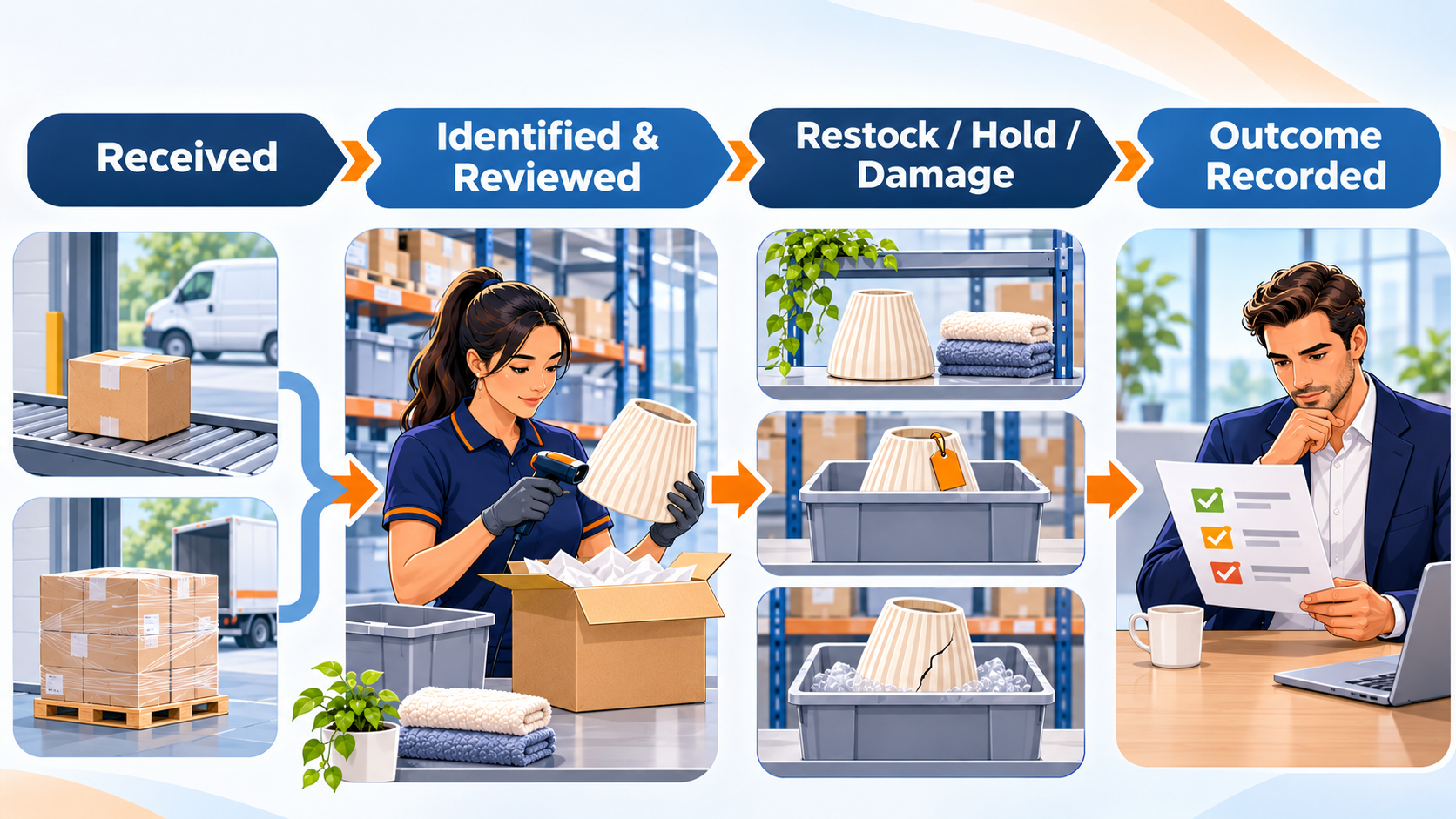
The work starts differently depending on what comes back. For small parcels, the EOS returns team pre-scans tracking numbers to confirm physical arrival. LTL returns go through an appointment and paperwork check before receiving. Both paths then move into a recorded condition review, where staff identify the product and route it for restock, hold, or damage handling. A suitable item can return to inventory through a recorded restock transaction; an uncertain item stays separate while the next direction is resolved. That is the practical difference between knowing a package was delivered and knowing what happened to the product inside.
EOS can support returns alongside warehousing and fulfillment, and it can also consider a dedicated returns-only engagement as a core service. You do not need to commit your forward fulfillment to EOS simply to start a serious discussion about your return path. Conversely, if the return problem is part of a larger warehouse or order-execution gap, the service conversation can include those related needs.
If the front-desk scene feels familiar, the conversation need not stop at returns. EOS can also discuss the wider supply chain, including China-to-U.S. imports, warehousing, fulfillment, and transportation to the customer. The right scope depends on which parts of that journey your business needs help managing.
EOS can also discuss a returns program that scales with seasonal demand instead of asking you to maintain an in-house team sized for the busiest period all year. The right staffing approach and charges depend on the return volume, product mix, and agreed service scope; any savings should be assessed in the actual proposal rather than assumed.
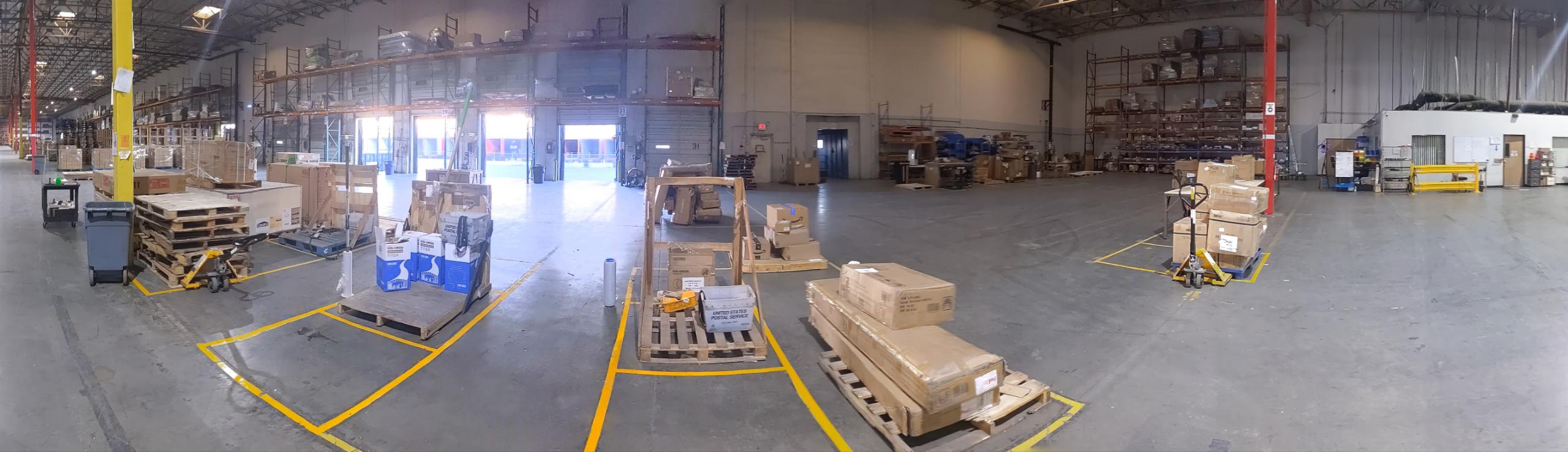
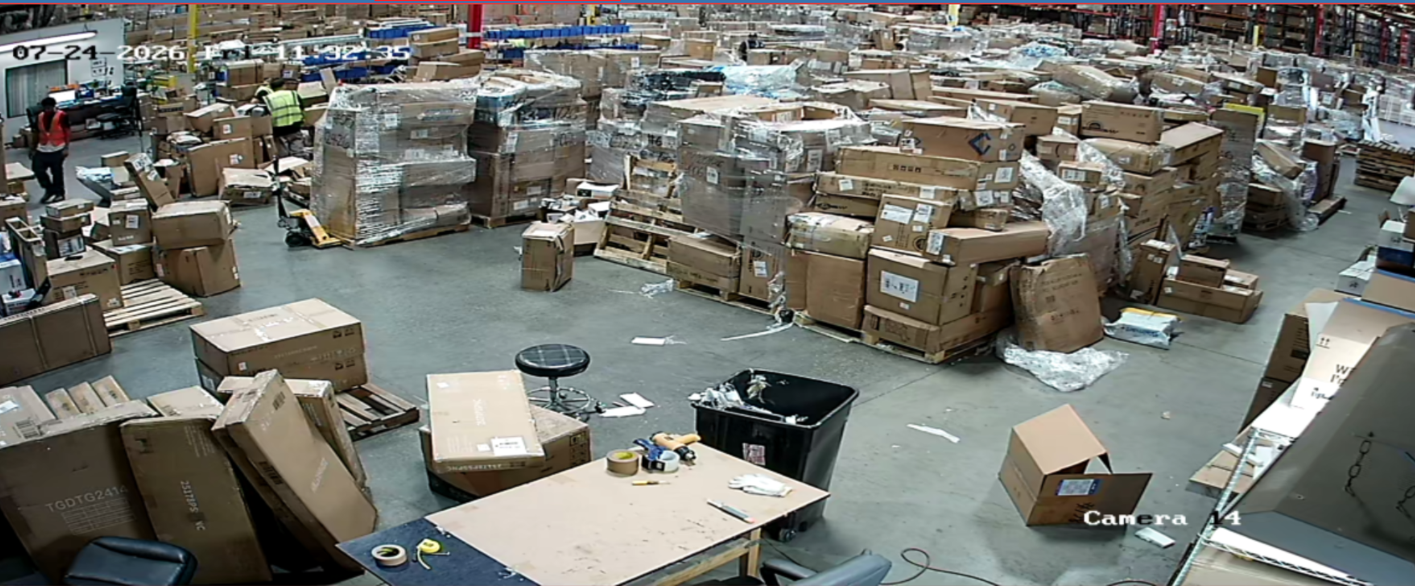
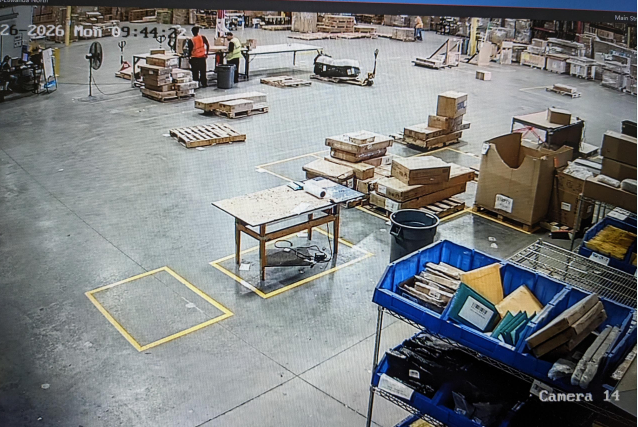
The right next step is a scoped discussion, not a promise that every exception will be solved the same way. Show EOS an ordinary return, a difficult return, the channels involved, your current destination, and the information your team needs before it can approve a refund or make a product available again. Ask which work EOS can own in your arrangement, what your people will still decide, and how an account manager would help define the rules.
Your company still owns the customer promise. A capable returns partner helps you carry out the physical work behind it and understand the outcome. Explore EOS’s Returns & Exception Handling solution if you are ready to evaluate either a dedicated returns program or a broader logistics relationship.
Frequently Asked Questions
What should a 3PL returns management agreement specify?
It should identify the return destination, what happens when an item arrives, how it is connected to an order, what condition and status information the business receives, who approves each next step, and how exceptions are escalated. Pricing and transition responsibilities should be equally clear.
Can a business hire a 3PL just for returns?
Yes, a dedicated returns-only arrangement is possible when a provider offers that service. EOS can consider returns as a core service without requiring the customer to move its existing warehousing or fulfillment. The return data and inventory handoff to any other provider still need to be scoped.
Is one provider for fulfillment and returns always better?
Not always. A provider that handles both fulfillment and returns in a connected operation can often move an approved, sellable return back into fulfillment inventory without shipping it to another facility. That may reduce handoffs and help your team see the item’s status sooner. A separate returns partner can still be the right choice when your current fulfillment provider does not process returns or you do not want to move a forward operation that works. EOS offers returns-only service as well as returns alongside fulfillment; neither model is a condition of the other. Compare the inventory path, system visibility, and responsibilities in your actual arrangement.
Who decides whether returned inventory can be resold?
The customer and provider should agree on review rules and decision rights. A physical inspection may establish whether a product is complete and in suitable condition, but the business must define when that result makes the item eligible for sellable inventory under its own product and channel requirements.
How do we move returns away from an old office address?
Update the customer-facing and marketplace return settings that you control, then account for labels already issued and packages still in transit. Agree with the old and new receiving parties on who will monitor the previous address, how a misdirected parcel will be identified, and when the transition can be considered complete.
What should we ask about returns visibility before signing?
Ask which events and statuses your team will see, when they become available, and how a held or disputed item appears. Distinguish a carrier delivery scan from physical receipt, condition review, and approval for sellable inventory.
What should we bring to an EOS returns consultation?
Bring your main return channels, an ordinary and an exceptional example, the current return address, the product information needed for review, the refund decision rules you control, and any returns still in transit. EOS can then discuss whether a returns-only program or a wider fulfillment relationship fits and what must be scoped for your account.
Return to Logistics Guides
Explore the full EOS knowledge guide.
Discover more from Enterprise Order Solutions
Subscribe to get the latest posts sent to your email.