

Estimated read time: 7 min
3PL returns processing is more than giving customers an address for unwanted products. If your business has outsourced fulfillment, the return still needs a destination, an owner, a connection to the original order, and a decision about what happens next. This guide helps growing sellers recognize the gap between a shipping arrangement and a workable returns operation before their office becomes the place where every unresolved carton lands.
Why Are Returns Coming Back to Our Office?
The new fulfillment arrangement is working. Orders leave the warehouse, your team can concentrate on sales, and the lease on your old space is finally behind you. Then a customer sends back a product.
The carton arrives at your corporate office.
Someone at reception signs for it. Someone else finds the order email. Your operations lead asks whether the item should be put back into stock, but there is no stockroom to put it in. No one set out to make reception the returns department. The sale had a plan; the return apparently did not.
If you have worked through the EOS 3PL returns guide and the guides on order, warehouse, and ERP visibility, you have seen how much a business depends on knowing what happened to its inventory. 3PL returns processing tests that understanding in reverse. The sale may have been captured and the shipment tracked, yet your team can still lose the thread when the product comes back.
This is not proof that your fulfillment provider did anything wrong. It is a sign that the forward path and the return path may have been scoped separately. Your team needs to find out what, exactly, the current agreement covers after delivery.
Even if this precise scene is not your business, the question is worth asking: orders have a way out, but do returns have a way back?

What 3PL Returns Processing Actually Needs to Cover
A return address tells a customer where to send a package. It does not tell your business who will receive it, how it will be identified, or when anyone will know what is inside.
For a usable returns arrangement, start with ownership. Who is responsible when the parcel arrives? How will the item be matched to the order or return authorization? Who checks whether the right product came back and what condition it is in? Who decides the next physical step, and how does your team learn the result?
Those are not details to hide in a warehouse diagram. They are the questions behind a very ordinary customer message: “Have you received my return yet?” Your service team cannot answer confidently if the package is on an office desk and the only record is a delivery scan.
The EOS Returns & Exception Handling guide explains the physical stages from intake through resolution. Here, the more important discovery is that those stages need an assigned home in your operating agreement. A parcel can reach the correct street address and still be in the wrong process.
That distinction is easy to miss while most orders move forward. It becomes obvious the first time a returned product needs more than a signature at the door.
When a 3PL Fulfillment Agreement Does Not Cover Returns
Your team may have compared warehouses, shipping rates, order cutoff times, and inventory visibility before moving. All reasonable questions. Returns often sound like a small add-on until you ask what the provider actually agreed to do.
One provider might receive returns and report that a carton arrived. Another arrangement might include a defined inspection and disposition workflow. A seller may instead keep returns at its own office or use a separate partner. None of those models is automatically wrong. What matters is whether the model was chosen deliberately and whether the people who must run it know their part.
Go back to the ordinary return. The customer used the address shown on the seller’s marketplace account. The marketplace may have its own return and refund requirements. The warehouse may be ready to ship replacement orders but may not have been asked to receive a return for this channel. Your office may have become the default address simply because nobody updated the old setting during the move.
The gap is not solved by changing that address alone. Sending the next carton to a warehouse without agreeing on identification, review, status, and who can authorize the outcome only relocates the uncertainty.
Ask what your existing arrangement includes before you conclude that you need a different provider. The answer may be a missing service scope, an outdated channel setting, or a split responsibility that nobody documented.

How Unprocessed Returns Affect Inventory Accuracy
Suppose the returned item looks unopened. Can your sales team treat it as available? Not yet. Someone still needs to establish that it is the right item, in the expected condition, and eligible for the next use under your rules.
The same caution applies in the opposite direction. A box can sit at the office for days while the business record still shows that the product is with a customer. A refund question, an inventory question, and a customer-service question are now about the same physical object, but three people may be looking at different information.
This is where the connected-systems story from the previous EOS series becomes useful. A WMS can support warehouse execution, an OMS can present order and return information, and an ERP can use the resulting facts for business decisions. None of those systems can make a carton at your office become inspected, saleable inventory by itself. Someone must run the physical handoff and record its outcome.
The goal is not to put every returned item back on the shelf. Some will need review, some may be incomplete, and some may not be resellable. The goal is to know which is which before your business makes its next promise to a buyer.
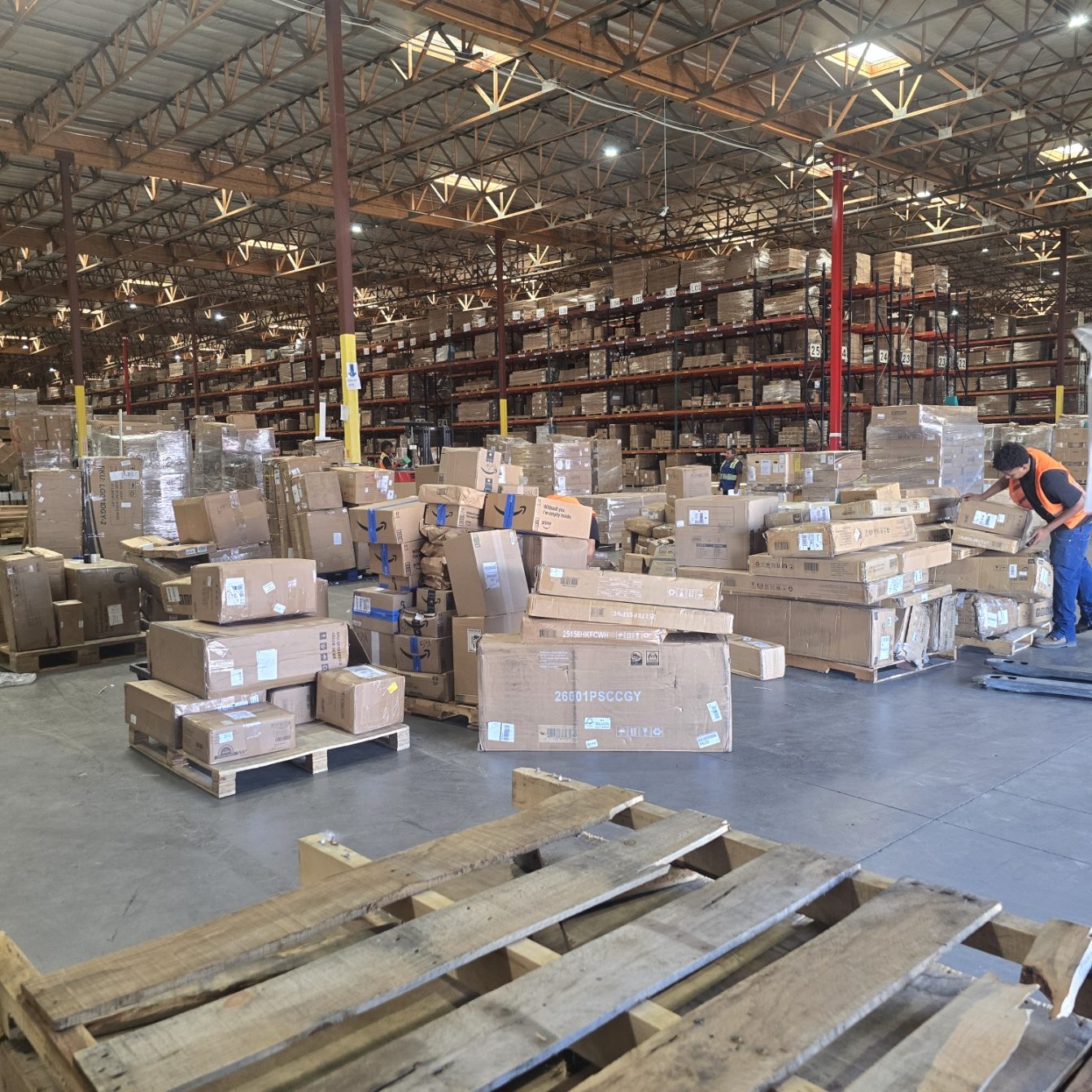
Questions to Ask About Your 3PL Returns Process
Take one real product and trace its return path. Where is the customer instructed to send it? Who receives it? Which order identifies it? What happens if the carton contains the wrong item or no identifying paperwork? Who checks condition, and who communicates a decision to your team?
Then look at the business rules. Who controls the refund decision under the relevant marketplace policy? What information does that person need before acting? When can a product be considered available again? Who handles the return if the original address is still printed on labels or saved in an old account setting?
You do not need to solve all of that in one meeting. You do need to learn whether the current answer is a process, a person with a spreadsheet, or no answer at all.
For one carton, office improvisation may seem efficient. The harder test arrives when many customers return different products for different reasons, long after the sales rush has ended. That is the pressure the next article will examine.
Frequently Asked Questions
Does a 3PL automatically process customer returns if it fulfills orders?
No. Forward fulfillment and returns processing can have different service scopes. Check whether your agreement covers the return destination, receiving, identification, condition review, inventory updates, and communication, rather than assuming that shipping orders includes every return task.
What is the difference between a return address and a returns operation?
A return address is a destination. A returns operation assigns responsibility for what happens after delivery: matching the item to a record, reviewing its condition, deciding its next physical step, and making that result visible to the business.
Why might returns still arrive at our office after we move to a 3PL?
An old return address may remain in a marketplace or customer-facing setting, or the 3PL agreement may not cover that return channel. Trace where the customer received the address and confirm who was meant to receive the parcel before changing it.
Can a returned item go straight back into available inventory?
Not simply because it has arrived. Its identity, condition, completeness, and eligibility under your rules need to be established first. Only suitable product should be returned to sellable inventory.
How should a 3PL identify a return with no paperwork inside?
The provider and seller should agree on an exception path before it happens. The receiving team may need to compare the parcel, label, product, and available order information, then hold the item for review if it still cannot be matched. A package should not quietly become available inventory without a dependable identity.
What should we ask our current 3PL about returns?
Ask which return channels and destinations it supports, what happens at receipt, how an item is matched and reviewed, which status your team receives, and who approves disposition. The answer should describe a real workflow, not only a return address.
How does returns processing connect to OMS and WMS visibility?
Physical review produces facts that an OMS can show to the customer and that a WMS can use for warehouse execution, depending on the provider’s setup. Without the physical handoff and an agreed status update, a visible order record may not explain what happened to the returned product.
Continue to Article 2
Follow the next part of the 3PL returns journey.
Discover more from Enterprise Order Solutions
Subscribe to get the latest posts sent to your email.

1 Comment
Ecommerce Returns Management After Holiday Sales
November 12, 2026[…] customers is also asking who will open the next box. This is the office workaround from the previous article on 3PL returns processing, only now it has a […]